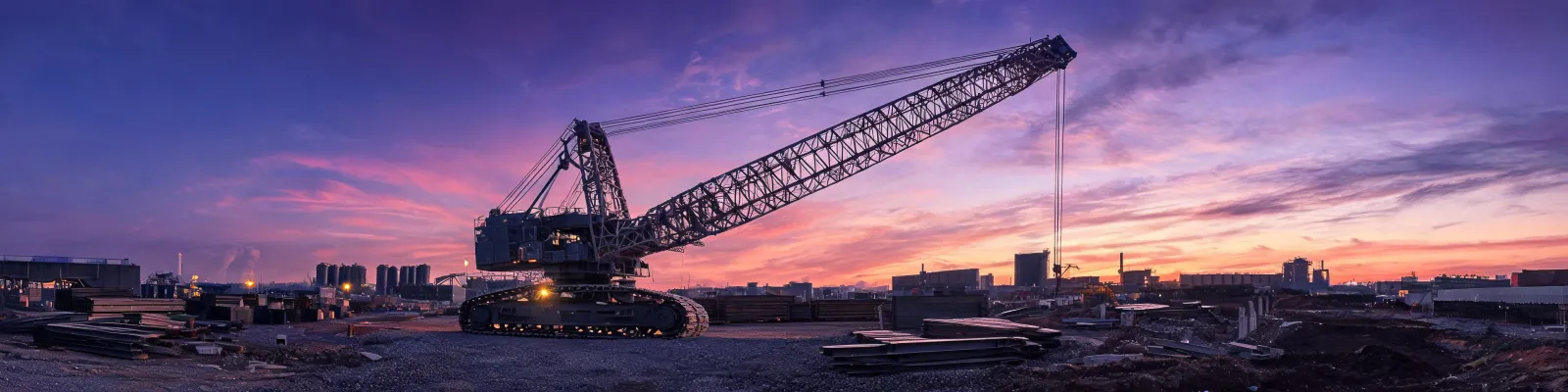
Crawler Crane Procurement: Three Comparisons That Actually Drive TCO (and One Search Trap)
I'm a procurement manager at a 350-person civil engineering firm. I've managed our crane and heavy equipment budget—roughly $2.4 million annually—for the past six years. In that time, I've negotiated with 40-plus vendors and put every single order through our cost tracking system.
This isn't a "which brand is best" article. That question doesn't actually help you budget. What helps is knowing which comparisons matter and which ones your team is probably getting wrong.
After tracking every quote, invoice, and downtime event across 60-plus crane-related orders, I've found that three comparisons explain most of the cost variance. Not brand. Not price-per-unit. These three.
Comparison 1: OEM Parts vs. Aftermarket — The TCO Gap Nobody Calculates
I used to assume aftermarket parts were the budget-friendly choice. That assumption cost us more than any single piece of equipment we've ever purchased.
In Q3 2021, we had a gearbox failure on one of our larger lattice boom crawlers. We'd been sourcing a third-party replacement part to save about $4,200 on the front end. The part failed prematurely. Diagnosis and replacement dragged out to 11 days of downtime—unplanned crew idle time, rental backup, and expedited shipping.
Total cost of that decision: somewhere around $38,000. Maybe $42,000, I'd have to open the system to give you the exact figure.
Here's what most procurement teams miss: the cost difference between OEM parts and aftermarket isn't the sticker price. It's the downtime math. And downtime math is brutal when you actually run the numbers.
OEM parts from Manitowoc, for example, carry a higher unit cost. They also come with traceable engineering specifications, warranty coverage, and documented compatibility with your specific crane configuration. That last part matters more than people think—especially when you're dealing with lattice boom crawler specifications that haven't changed in a decade but have very specific tolerances.
I'm not saying aftermarket is always wrong. If your downtime cost is low and the part is non-critical, the math can work. But for critical-path equipment, the premium on OEM parts is almost always cheaper than the alternative. That was a hard lesson.
Comparison 2: New vs. Refurbished Crawler Cranes — Where Compliance Costs Hide
This comparison is trickier than most buyers realize, and it's where I see procurement teams most consistently underbudget.
The upfront difference between a new lattice boom crawler crane and a refurbished unit is obvious—sometimes $150,000 to $400,000 depending on tonnage. What isn't obvious are the compliance overheads that show up later.
Crawler crane compliance requirements vary by jurisdiction, but most U.S. operations follow OSHA's crane standards (29 CFR 1926 Subpart CC) and ASME B30 series requirements. A refurbished crane might meet these requirements on paper. In practice, we've found that inspections, load testing, and documentation verification on refurbished units add 8-15% to the effective cost. And that's before you factor in whether the original load charts remain valid with aftermarket components.
So the "cheaper" refurb can end up costing just as much within the first 18 months. Sometimes more.
Here's the counterintuitive part: for mid-size mobile crane wholesale purchases, we've actually had better TCO outcomes with new equipment than refurbished. Not because refurbished is bad—it isn't—but because the compliance verification work on used equipment routinely exceeds initial estimates. Every time. That one surprised me when I pulled the numbers.
My experience is based on roughly 15 new-vs-refurbished evaluations over six years, mostly in the 100-300 ton range. If you're working with smaller tonnage or different equipment classes, your results might differ.
Comparison 3: Direct Sourcing vs. Search Engines — The Manitowoc Search Trap
This one costs time rather than money, but in procurement, time is money.
If you've ever searched for Manitowoc parts online—crane parts, specifically—you know what happens. The results are flooded with ice machine components. That's because Manitowoc as a brand covers both heavy lifting equipment and foodservice equipment. Same company name. Completely different supply chains with zero overlap.
Here's the practical implication. When sourcing OEM parts, don't rely on generic web searches. Go directly to your authorized dealer or the manufacturer's official parts portal. We've had junior team members spend half a day chasing what looked like a crane hydraulic component—only to discover it was for a commercial ice machine. That's a real time cost, and it happens more often than you'd think.
If you're searching "manitowoc ice machine parts" or "ice machine manitowoc parts," you're in the wrong supply chain entirely. And if you're searching for crane parts and getting foodservice results, you're one click away from ordering the wrong thing.
The fix is simple: bookmark your official parts channels. Don't trust search engines to disambiguate. They won't.
How to Decide: A Scenario Breakdown
I'm not going to pretend there's one right answer for every procurement scenario. Here's how I'd think about each comparison:
- Critical-path equipment + high downtime cost: OEM parts, no question. The premium pays for itself the first time you avoid a failure.
- Non-critical equipment + low downtime cost: Aftermarket can be a reasonable gamble. Track failure rates carefully.
- Long-term fleet planning + compliance-heavy jurisdiction: New equipment, despite the higher upfront cost. The compliance math favors it.
- Short-term project + flexible timeline: Refurbished might work—if you budget for inspection and verification upfront.
- Parts sourcing, always: Direct channels. Every time.
The broader point is that procurement in this industry is evolving. What was best practice in 2019—letting vendors handle compliance documentation, trusting search results, optimizing for lowest unit price—doesn't hold up in 2026. The fundamentals of TCO haven't changed. The execution has.
Caveats and What I'm Still Learning
This pricing and compliance experience is accurate as of early 2026. OSHA standards update periodically, and parts pricing shifts with supply chain conditions. Verify current figures before locking your budget.
I've only managed procurement within domestic U.S. operations. International sourcing—with its own compliance frameworks, logistics costs, and dealer networks—may follow different patterns. I can't speak to that.
And my experience is based on about 60 orders with crawler and mobile cranes in the 100-300 ton range. If you're working with tower cranes, overhead hoists, or a different tonnage class, your comparison framework might look different.
But the three comparisons themselves—OEM vs. aftermarket, new vs. refurbished, direct vs. search—those hold across categories. Get those right, and you're already ahead of most procurement teams I've seen.