Tech Specs · Selection Authority
SWL at radius · boom/jib geometry · ground bearing pressure · counterweight kits · ASME B30 documentation — the parameter set lift planners use before steel arrives on the pad.
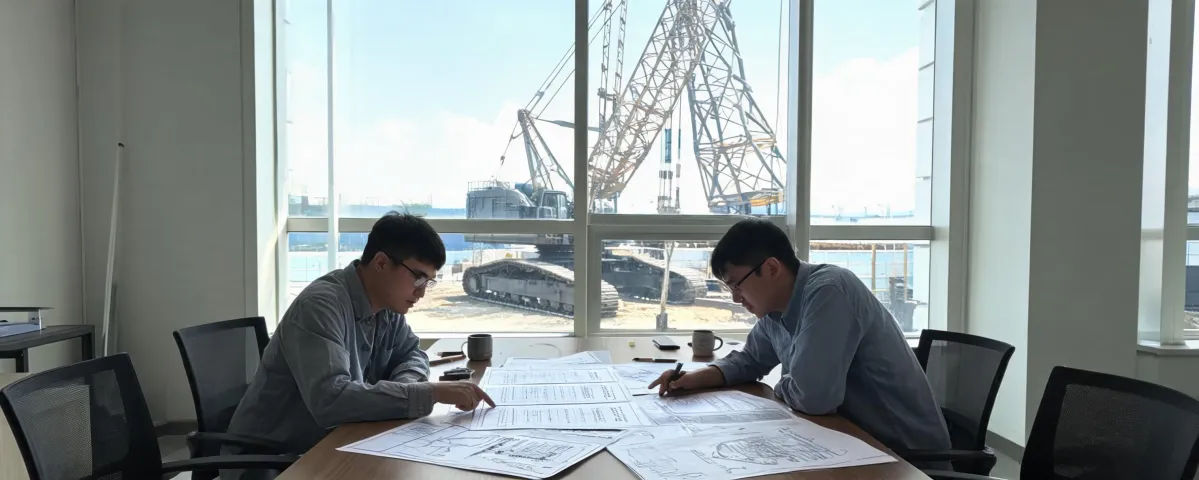
Confirm pick weight, radius and height — including dynamic factors for tandem or pick-and-carry notes.
Select main boom and fixed/luffing jib combination from capacity tables at the governing radius.
Check ground bearing pressure against mat layout and allowable pad loading from the geotech report.
Lock counterweight kit and carbody ballast for the chart line; verify transport envelope for boom sections.
Issue ASME B30 lift plan with LMI configuration, ATB tests and wind-speed limits for the window.
Commission on pad: pin gauges, slew torque audit and chart re-cert before first critical pick.
Plant buyers sometimes compare a diesel lattice boom crawler to a fixed electric overhead crane on total cost of ownership. Electric overhead systems win on indoor energy cost and zero exhaust where the bay geometry never changes. Diesel mobile crawlers win when the lift radius moves with the outage — no runway steel, flexible pad placement, and charted lifting capacity at changing radii. Manitowoc Tech Specs packs state both cases clearly: if your picks stay inside one building for a decade, size an overhead line; if the critical path is a three-week turnaround across multiple pads, shortlist a crawler class with documented boom length, hoist speed (m/min) and ground pressure for temporary mats.
Transparency matters: crawler charts assume level, compacted pads and wind limits; exceed those and the competent person must derate. We publish operating weight, counterweight kit mass and slewing speed so the EOR can model edge cases instead of discovering them after steel arrives.
Include pick weight, radius, jib need and pad constraints — application engineers return a class recommendation with chart excerpts.