-
There Is No Universal Best Crane Manufacturer
-
Scenario A: One Crane for One Defined Project
-
Scenario B: A Multi-Unit Fleet or Rental Operation
-
Scenario C: Specialized Large-Tonnage Lattice-Boom Work
-
Cross-Scenario Questions Worth Asking Any Crane Manufacturer
-
How to Tell Which Crane Sourcing Scenario You Are In
If you searched for 'manitowoc ice machine parts' or 'ice maker manitowoc ice machine parts diagram,' this page is not the one you want. That is the commercial ice equipment side of the Manitowoc name, which is no longer part of the crane company. The side I am writing about is the crane manufacturer—the one known for lattice-boom crawler cranes and heavy lifting equipment. If you actually need an ice machine part, search with the model and serial number from the equipment nameplate instead.
I have spent more than a decade on the procurement side of construction equipment. My job has been to select cranes for rental fleets, for contractors, and for situations where a crane has to arrive on schedule and work without drama. When people ask me how to evaluate crane manufacturers, my answer is not always what they expect. It depends less on the brand and more on the use case.
Early in my career, I made a common mistake: I assumed the manufacturer with the highest rated capacity on the brochure was the right choice. It took one project delay and a very expensive idle crew to change my mind. A crane may look great on paper, but the manufacturer's support system is what keeps the project moving.
There Is No Universal Best Crane Manufacturer
Crane manufacturers build different machines for different work. A manufacturer can be a first choice for a rental fleet and a poor fit for a contractor that needs one specific lift study. Many evaluation guides ignore this and hand you a generic comparison table. That approach gives false confidence.
I think of crawler crane sourcing in three scenarios.
- Scenario A: One crane for one defined project.
- Scenario B: A multi-unit crane fleet or rental operation.
- Scenario C: Specialized large-tonnage lattice-boom lifting.
Which scenario you are in changes the evaluation criteria more than any brand name does.
Scenario A: One Crane for One Defined Project
If your company won a construction job and needs a crawler crane to set steel components, process equipment, or heavy mechanical units, you are not trying to build a standard fleet. You want the job completed safely and on schedule. In this scenario, the evaluation should focus on project support.
First, look at capacity at the working radius, not maximum capacity. A specification sheet might show an impressive maximum lift at short radius. But if your real pick is at a longer radius with a certain boom length, the usable capacity can be much lower. Ask for the complete load chart for the exact configuration you intend to use.
Second, test engineering responsiveness. Send the manufacturer or dealer a practical question: load weight, radius, site constraints, ground conditions, and planned boom configuration. See how long it takes them to reply with a sensible answer. If they only become responsive after the purchase order is signed, that is a warning sign.
Third, define the parts and service plan. Ask where the nearest service point is, what components are stocked locally, and whether an OEM technician is available for commissioning and initial lifts. For one project, downtime is not just a repair cost. It is the cost of an entire crew standing still.
Scenario B: A Multi-Unit Fleet or Rental Operation
Once you own five or more cranes, lifecycle cost is not an academic term. Every repair becomes a line item, and every day a crane sits idle becomes lost revenue. In this scenario, I evaluate manufacturers differently.
I balance two competing goals. Standardizing on one manufacturer creates operator familiarity and simplifies parts inventory. But too much dependence on one brand can be risky if that manufacturer changes its support model or has a product-wide issue. More often than not, a primary manufacturer with a smaller backup source is the better answer.
The most important question for a fleet-level purchase is this: How will this manufacturer support the model five or ten years from now? Most suppliers will not make firm long-term commitments, so ask about the previous generation of similar cranes. Are service bulletins available? Are structural welds and major hydraulic components still supported? Does the local dealer stock parts for older models, or only for current machines?
Telematics and remote diagnostics also changed the conversation. In 2020, remote monitoring was something many buyers considered optional. By 2026, more fleet operators expect error codes, service reminders, and utilization data. If a manufacturer cannot explain how their remote support system works, you are probably looking at an outdated approach.
One counterintuitive point: for a rental fleet, the newest machine is not always the best machine. Rental customers often prefer a familiar, proven platform. They do not want to spend the first week of a rental learning a brand-new control system. A proven model with good OEM support is often a smarter fleet asset than the newest flagship.
Scenario C: Specialized Large-Tonnage Lattice-Boom Work
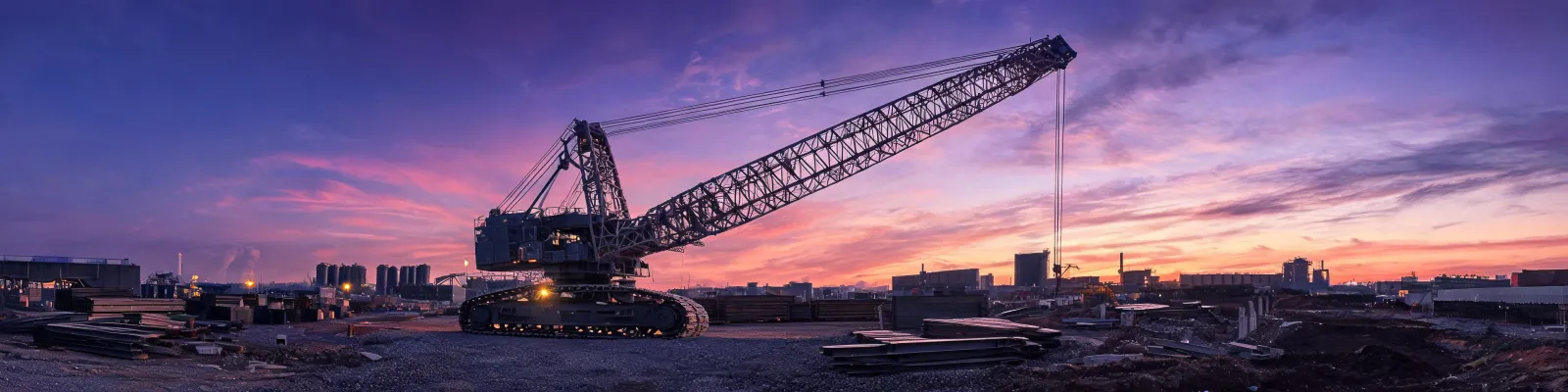
This is a different game. When you are looking at large crawler cranes—the type of work where a model like the Manitowoc 21000 might be considered—the decision is not about filling a rental fleet slot. It is about application engineering.
Large lattice-boom cranes are highly configurable. Boom length, jib configuration, counterweight, and superlift arrangement can all change the load chart. The manufacturer's engineering team has to help you validate what configuration makes sense for the lifts you actually need to perform.
In this class, I ask very different questions:
- Does the manufacturer have engineers who can review a configuration and respond with specific guidance?
- Can the local dealer support the assembly, disassembly, and heavy component movement?
- Does the manufacturer give you enough data to check ground bearing pressure and site access?
- Are operator and maintenance training programs available for the people who will work with this machine?
For high-capacity work, transportation is often the hidden constraint. A crane may have impressive capacity, but if its components cannot be moved to the site economically, the project suffers. Ask for module weights, transport dimensions, and assembly plans before you let the brochure impress you.
Cross-Scenario Questions Worth Asking Any Crane Manufacturer
Whether you are in Scenario A, B, or C, these are the questions I put on the table before a final decision. The goal is not to get a low price. The goal is to understand what the manufacturer will actually do after the sale.
- Ask for the load chart and operating manual for the exact machine configuration you plan to use. If you get a generic brochure instead, that tells you something.
- Ask about application engineering support. Who reviews lifting plans? What information do they need from you? How long does a typical response take?
- Ask about parts lead times for consumables, wearable components, and critical control system parts. A local dealer stock list is more useful than a vague promise of global support.
- Ask about training. Are operator and maintenance courses available? Are manuals available in the language your crew uses on site?
- Ask about standards and documentation. In the United States, mobile crane work is typically addressed by ASME B30.5 and, for construction, OSHA 29 CFR 1926 Subpart CC. No manufacturer can guarantee a safe lift by itself—site conditions and operator competence matter—but the documentation and engineering support should help you meet those responsibilities.
If someone says a crane is 'OSHA-approved,' treat that as a sales phrase, not a technical term. OSHA does not approve cranes. What matters is honest load charts, proper manuals, and a support team that takes responsibility for the engineering side of the equipment.
How to Tell Which Crane Sourcing Scenario You Are In
If you are still unsure where to start, use three sorting questions.
- Will this crane work on many different jobs and sites over the next several years? If yes, evaluate it as a fleet asset.
- Is this crane committed to one contract with a fixed schedule? If yes, evaluate it as project support.
- Is the real reason for this purchase not daily bulk lifting, but occasional very difficult heavy lifts? If yes, evaluate it as an engineering capability decision.
You may be in more than one scenario at the same time. That is fine. Use the scenario that creates the highest financial risk if something goes wrong. If an idle project will cost more than an idle fleet, choose the manufacturer with the strongest project support.
The fundamentals have not changed completely. You still need to know what a crane can lift, how it gets assembled, and who answers when something breaks. What has changed since 2020 is how much uptime depends on the manufacturer's engineering, data, and parts systems. A manufacturer that seems average at maximum capacity can be the better overall choice for your real workflow.
That is why I no longer ask which crane manufacturer is the best. I ask which one fits the way my cranes will be used, maintained, and supported. For crawler crane sourcing, the brand name is only a starting point. The evaluation process is where the real answer shows up.