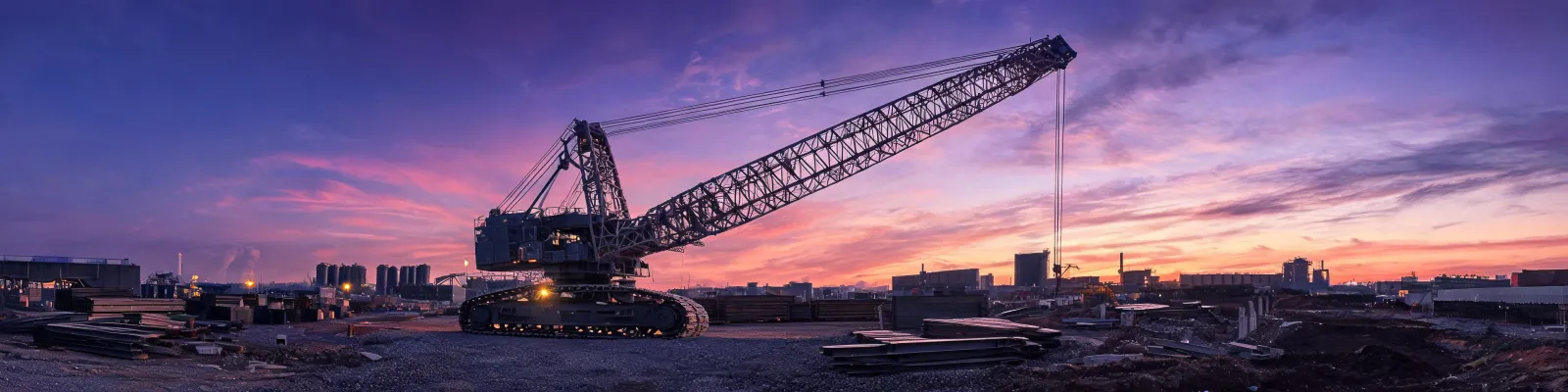
Quick note before this starts sounding like a sales page: if you came here looking for Manitowoc ice machine parts or Manitowoc ice parts, you're likely on the wrong part of the brand. That's the foodservice business line. This article is about the other Manitowoc side—cranes. Specifically, how to think about a crawler crane distributor, city crane sourcing, and what a crane wholesale cost guide should actually include.
I'm the quality and brand compliance manager at a lifting equipment manufacturer. I review every crawler crane before it ships—roughly 60 machines a year. I've rejected 11% of first deliveries in 2025 for documentation mismatches, wrong counterweight configurations, or load charts that didn't match the physical build. After I implemented our pre-shipment verification protocol in 2022, configuration-related warranty claims dropped by about a third. That experience shapes every sourcing conversation I have.
The honest answer to "which crawler crane distributor should I use?" is: it depends. There's no universal answer for a one-project contractor, a rental company building a fleet, and a dealer buying inventory. The right source changes with utilization, service capability, and exit strategy.
I think the most useful way to approach this is as a decision tree. Find the scenario that sounds like you and ignore the other two until you reach the self-check at the end.
- Scenario A: You're a contractor who needs one crane for a project and doesn't own a fleet maintenance team.
- Scenario B: You're a rental company trying to increase the utilization of a fleet that already exists.
- Scenario C: You're a dealer or distributor buying inventory to resell.
Scenario A: One Project, One Crane, No Maintenance Department
My first piece of advice is probably not what you expect from a sourcing guide: consider renting before buying. The upside of owning is long-term availability. The risk is that the crane sits after the project ends. I keep asking contractors the same question: is the benefit of having the machine on your own spread worth the risk of it sitting idle? For a single project, the expected value usually says rent.
If buying still makes sense—you have a pipeline of projects, or the crane is part of a larger asset strategy—then your best source is a local crawler crane distributor. City crane sourcing isn't just about reducing freight. It's about response time when a swing pin needs replacement or a counterweight configuration needs a service technician. A distributor in your metro area can solve that in hours, not weeks.
Before you sign, ask for three things: the load chart for the exact configuration, the manufacturer's configuration record, and the inspection history. Per OSHA 1926.1400 and ASME B30.5, the user has a responsibility to make sure the crane configuration matches the load chart. That is not a formality. I rejected a machine in 2024 because the boom length on the load chart didn't match the serial number tags. The vendor claimed it was "within industry standard." It wasn't.
If you're looking at a Manitowoc 2250 or 999, the same rule applies. The model name tells you the family, not the certification. The configuration record tells you what that particular crane can do.
Scenario B: Building or Expanding a Rental Fleet
If you run a rental fleet, you aren't buying a crane; you're buying uptime. Every machine has to be available when a customer calls. The small purchase price in the spreadsheet can become the expensive machine in the service bay.
In this scenario, standardization matters more than any single deal. If your fleet has three different OEM models in the same tonnage class, you need three sets of spare parts, three training documents, and three certification workflows. A fleet owner once bought a bargain unit because the price was hard to ignore. Then the counterweight design turned out to be unique to that model. The parts stock required to support it destroyed the savings.
I understood this better when I compared two 2250-class cranes side by side—same model year, one with a complete OEM service history, one with a mix of third-party service notes. The second looked fine in photos. The first had a documented chain of custody for every pin removal and counterweight change. That documentation made it easier to certify and easier to sell later. The paper is part of the machine.
For city crane sourcing, local parts availability is often the deciding factor. Rental jobs in dense urban environments have narrow permit windows and tight laydown areas. A machine that waits three days for a part loses more than revenue—it loses customer trust.
Scenario C: Buying Inventory to Resell
If you're a dealer or distributor, the crane wholesale cost guide is your natural starting point. But most wholesale cost guides miss the real line items. They compare base machines and ignore the cost to land that machine in your market: freight, customs, import duties, port handling, factory acceptance testing, and commissioning.
I'd argue for authorized distribution agreements over one-off broker deals when you're buying to resell. The surprise isn't that broker prices are lower. It's how much hidden value comes with an OEM-backed supply chain—engineering support, configuration verification, warranty claim processes, and updated load charts.
I remember a dealer who bought a "wholesale" unit through a broker. The machine arrived without the official counterweight insert list. It took 11 weeks to get the manufacturer's configuration file. The deal saved about $70,000 on purchase, then generated $48,000 in storage and engineering review costs before resale. I might be misremembering the exact numbers, but the lesson hasn't changed.
What a Crane Wholesale Cost Guide Should Actually Show
I can't give you a single price for "a Manitowoc crawler crane" because the line spans too many configurations. Based on public auction and listing data from Ritchie Bros. and similar marketplaces, accessed in January 2026, price gaps within one model are often larger than price gaps between competing models. The cause is almost always configuration and documentation.
When you compare quotes, treat this as your checklist:
- Base machine price, including boom, luffing jib, and counterweights
- OEM configuration verification and load chart update
- Freight, permits, escorts, and site access planning
- Assembly, disassembly, and commissioning support
- Operator and maintenance training
- First-year parts replacement budget
- Resale value assumption after a defined ownership period
Let me rephrase: the price is not the cost. The cost includes the paperwork, the service chain, and the machine's future resale position.
The last item is the one most people skip. If you're torn between a lower-priced machine with limited documentation and a higher-priced machine with full documentation, run the numbers with a five-year resale assumption. In my experience, the documented machine holds value better. The undocumented one becomes a negotiation problem later.
How to Tell Which Scenario You're In
Answer these four questions:
- Who will service the crane after delivery? If the answer is "no one," treat yourself as Scenario A and rent or buy only with a local distributor.
- Will this machine log more than 1,200 hours a year? If not, ownership is harder to justify.
- Are you buying it for your own rental tariff or for a resale lot? Rental tariff means Scenario B. Resale lot means Scenario C.
- Can you get the OEM configuration record before you pay? If not, ask why not. If the seller can't explain, that's your answer.
If you're still uncertain, you're probably Scenario A. That's not a bad place to be. It just means the lowest-risk move is renting or buying from a distributor with a service department, not chasing a distant bargain.
An informed customer asks better questions and makes faster decisions. I'd rather spend ten minutes explaining load chart verification than watch a contractor accept a crane that can't be operated on the job they booked. No sourcing guide can replace that conversation.
And if you did land here while searching for Manitowoc ice machine parts, I hope you found the right side of the brand. The crane side has different load charts—and a whole lot more paperwork.