-
What should I look for in a city crane supplier?
-
Where can I find a reliable tower crane catalog?
-
When should I choose a Manitowoc lattice boom crawler crane over a hydraulic crane?
-
How important is OEM parts and service support when buying a crane?
-
How do small orders fit into crane sourcing? Will suppliers take me seriously?
-
What's the difference between Manitowoc cranes and Manitowoc ice machine parts?
-
What's the biggest sourcing mistake you've made?
I've been an equipment procurement lead for a regional lifting and rigging contractor for about 12 years. I've made six significant sourcing mistakes, totaling roughly $340k in wasted budget. My team now uses a checklist so we don't repeat them. My experience is based on mid-size industrial and municipal work, not 1,000-ton wind-project mega-lifts. If you're doing those, some of this still applies, but your engineering and logistics requirements will be different.
This FAQ covers the questions I wish someone had answered before I started.
What should I look for in a city crane supplier?
City work is different. You're not choosing the crane with the biggest chart; you're choosing a supplier who has done a tight urban job before. Four things I check now: local knowledge. Equipment condition. Operator quality. Response speed.
Local knowledge means permits, street closures, narrow access roads, overhead power lines, and ground strength under asphalt. Equipment condition means current inspection stickers, maintenance logs, and no cracked pins hiding under fresh paint. Operator quality means certified operators who know the specific model. Response speed means what happens when a part breaks on Friday afternoon.
The cheapest day rate rarely survives contact with a city street. To be fair, a higher day rate can still be the best deal if the supplier brings their own traffic control, site supervisor, and rigging gear. That's what I mean by city crane supplier: the supplier who has already done your specific obstacle course.
Where can I find a reliable tower crane catalog?
Start at the manufacturer. If you're looking at the Manitowoc family, Potain (a Manitowoc company) publishes configuration-based catalogs and selection guides for tower cranes. What I learned the hard way: a catalog is not a quote. It lists the model, jib length, maximum hook height, and capacities, but it doesn't tell you whether the foundation kit is included, how many trucks you need for transport, or whether the mast sections are compatible with the tower sections you already own.
When I compare catalogs, I make a simple table: max load at jib tip, max load near the mast, required counterweight, transport dimensions, and power requirements. Without that table, you're comparing marketing brochures. Not ideal, but workable.
Ask for the erection manual or load chart before you negotiate. The supplier who sends those without a fight is usually the supplier who knows what they're selling. That's why I now treat a tower crane catalog as the first step in tower crane sourcing, not the final word.
When should I choose a Manitowoc lattice boom crawler crane over a hydraulic crane?
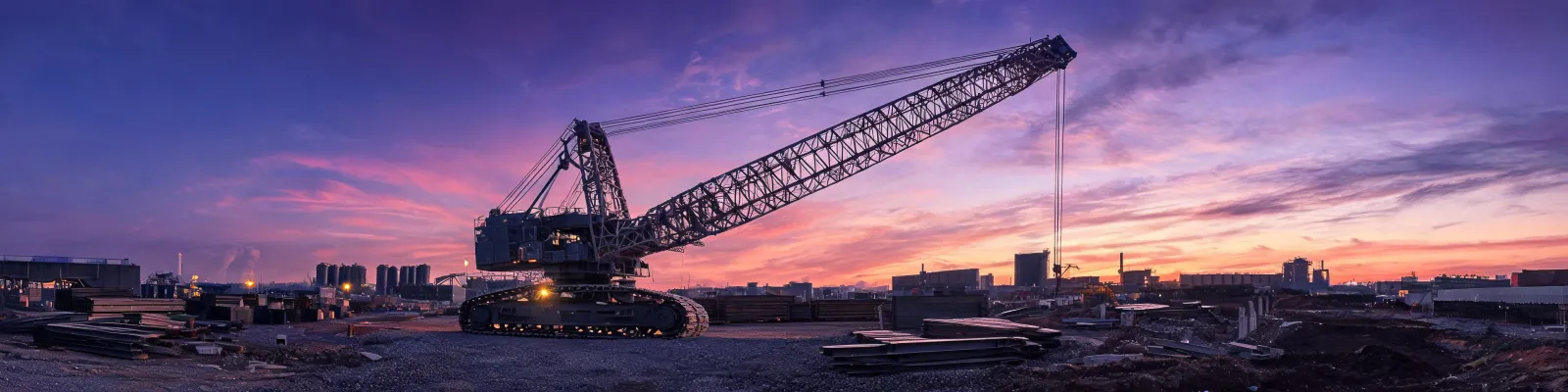
Lattice boom crawlers get my attention when the lift is heavy, the boom is long, and the ground is less than perfect. The lattice structure is relatively light for its strength, and the crawlers spread the load out without outriggers. Manitowoc's lattice boom crawler cranes—the 999, 2250, 16000, 18000, and 21000 range, for example—have built their reputation in exactly those conditions.
The catch is logistics. A crawler doesn't drive from job to job; it ships in modules and needs assembly time. So if the job is a quick urban pick-and-set, a hydraulic truck crane may be the better answer. If the job is a long, heavy lift project with soft ground, the lattice crawler can win.
Don't ask which is 'better' in general. Ask which fits your site, schedule, and load chart. One rule I don't bend: no one should guarantee a lift based on a catalog alone. The load chart, rigging plan, and ground bearing calculations need to be reviewed by a qualified person. That's where OSHA 1926 Subpart CC and ASME B30.5 come in.
How important is OEM parts and service support when buying a crane?
To me, it's more important than the paint color. When we bought a used Manitowoc lattice crawler, the decision came down to parts availability and service documentation. Not because third-party parts are always bad—I've used them for minor components—but because for boom pins, hoist drums, and structural items, the OEM gives you traceability, engineering drawings, and a phone number when something doesn't fit.
One mistake still hurts: I once saved $3,200 on a non-OEM hoist seal kit. It failed after two weeks, and the downtime cost more than the savings. Today I ask four questions before a crane purchase: (1) Are the service manuals and load charts current? (2) What OEM parts are stocked locally? (3) What's the lead time for major components? (4) Can the manufacturer support this exact serial number? If the answer to any of those is 'I don't know,' keep asking.
How do small orders fit into crane sourcing? Will suppliers take me seriously?
I'll be blunt: some won't, and that's okay. Their loss. In my first year, I called a dealer about one used tower crane mast section. The salesman asked if that was all we needed. The next dealer treated the $18,000 order like it mattered—sent drawings, confirmed compatibility, explained delivery. That dealer got our next two tower crane orders.
Small doesn't mean unimportant; it means potential. If a supplier only wants the huge contract, they'll never see the repeat business. My advice: look for suppliers who answer small questions quickly. They usually answer big questions even better.
What's the difference between Manitowoc cranes and Manitowoc ice machine parts?
Searching for crane specs and seeing ice machine parts pop up is confusing. Same brand name, different business. Manitowoc started in shipbuilding and later became known for cranes and, in another division, commercial foodservice equipment—including ice machines. Today, the crane side and the foodservice side are separate businesses using the same historic name.
If you're here for crane information, you're in the right place. If you need Manitowoc ice machine parts, you're looking for the foodservice equipment division, not the lifting equipment team. The name is shared, but the products, service networks, and parts catalogs are not.
What's the biggest sourcing mistake you've made?
Had three days to source a tower crane for a fast-track project. Normally I'd spend a week comparing three options, but I skipped it and accepted the quote with the best price. The crane was fine—the supplier wasn't. Delivery date slipped, the foundation drawings didn't match the mast type, and I spent another week fixing a problem the quote should have caught. That was September 2022. It cost about $27,000 in delays and probably a good chunk of trust.
The checklist I use now is simple: model and configuration confirmed; foundation and anchor requirements; delivery timeline in writing; payment terms tied to milestones; and at least one conversation with the person who will actually do the site survey. It still takes time. But it's cheaper than the alternative.
I get why people grab the cheapest quote—budgets are real. But the hidden costs add up.