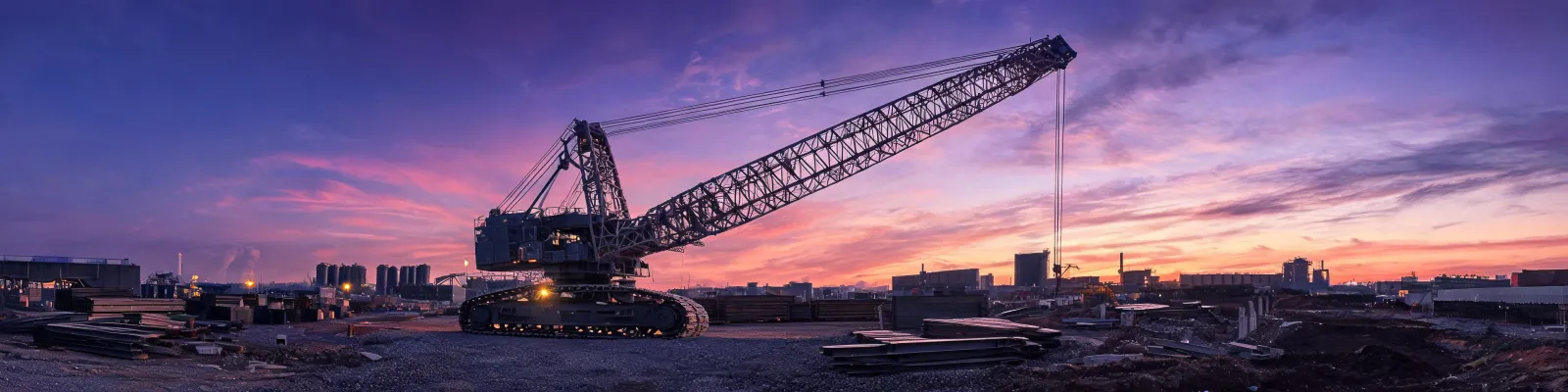
What looks like a simple purchasing task—search for a crane model, find a parts list, call a distributor—can turn out to be surprisingly expensive. The problem is not that the crane market is confusing. The problem is that many of us search with terms that sound specific but are not.
If you reached this article looking for "Manitowoc ice machine parts," stop here. That is the commercial foodservice side. This article is about the crane side of Manitowoc: lattice-boom crawlers, rough terrain cranes, tower cranes, and truck-mounted cranes. The name overlap is messy, and the buying process is completely different.
The problem I felt
I am an office administrator for a regional lifting and equipment company. I manage parts, service, and some equipment purchasing. In a normal year I place maybe 70 parts and service orders—somewhere in the 60-to-80 range, though I would need to check our system for an exact count. Total spend is around $700,000 annually. I report to operations and finance. That puts me in the middle: I get the technical request from the shop, and I also see the invoice problems, the freight bills, and the days the crane sat idle.
When I took over purchasing in 2021, I thought the main challenge was price. I learned that price mistakes are easy to catch. The expensive mistakes come from assumptions about what is included in the sale or the part number.
One limit up front: my experience is from a mid-sized regional fleet with a mix of crawler cranes, rough terrain cranes, and tower crane rentals. A national rental company that buys in large volumes may have more leverage and better internal support than we do. An owner-operator buying a single used crane may need even more caution, because there is no second person to catch a bad part before it reaches a jobsite.
The first trap: one "Manitowoc parts list" does not exist
When a crane goes down, the request sounds simple: "Get me the parts list and get me a quote." But cranes are not like trucks with one VIN and one easy catalog. Two visually similar Manitowoc crawlers can have different boom sections, jib attachments, counterweight packages, and serial ranges. The phrase "Manitowoc parts list" is only a starting point. The actual list depends on the machine's serial number and build configuration.
In 2024, I ordered replacement boom wear pads after pulling a "Manitowoc parts list" from a third-party website. The site listed one part number for models from 2010 through 2018. That should have been a red flag. A single wear pad part number that spans eight model years across several families is not a precise crane part number; it is a guess sold as a catalog.
The quote was close to $1,900 less than the OEM quote. The parts arrived without material certification. Our maintenance supervisor rejected them before installation because he could not trace the material back to the original engineering. I then ordered the correct OEM kit with expedited freight. The total cost, including extra downtime and freight, was north of $7,000—maybe not exactly, but that is the number accounting remembers.
Why "terrain crane wholesale" is more than a price search
After that parts experience, I started listening differently to the sales side. The phrase "terrain crane wholesale" treats a crane like a commodity order. There are cases where volume buying makes sense—when a fleet is being standardized on one model family, with the same options and one service channel. But the word "wholesale" does not replace the spec review. A crane load chart is not a single number. It changes with boom length, jib, counterweight, outrigger position, and even tire condition. Two machines with the same nominal maximum capacity can have different radius charts and different parts.
The same idea applies to tower cranes. When I evaluate a "tower crane distributor," I now ask what kind of technical support the distributor can supply. A tower crane does not simply arrive on a trailer. It needs a foundation, tie-ins to the building, a specialized erection crew, and documentation for the local authorities. If the distributor cannot answer those questions, the distributor is closer to a broker, and the risk profile changes.
The phrase "crane truck distributor buying guide" looks like it should answer all of this. Some guides I have read are truck guides with the word crane added. They discuss chassis, engine, and cab comfort—then stop before the part that matters: the crane package. The subframe, hydraulic system, structural mounting, load chart, and compliance standards all have to be treated as one integrated machine.
The deeper cause: proof, not brand labels
The labels "OEM," "aftermarket," "wholesale," and "compatible" matter less than most buyers think. What matters is whether the supplier can prove what the part is, and whether that part keeps the crane within its documented design.
On normal service parts, aftermarket suppliers can be fine. We use them. On load-path parts, I require material traceability and fitment sign-off before the part goes near one of our cranes. ASME B30.5 covers mobile cranes, ASME B30.3 covers tower cranes, and OSHA's Cranes and Derricks in Construction standard, 29 CFR Part 1926 Subpart CC, treats load charts and inspections as central to safe operation. I am not a compliance officer. I am a buyer. That is exactly why I ask for those documents before I authorize payment.
What I do now
I have stopped using generic lists. When someone sends me a one-page "Manitowoc parts list," I ask for a serial-specific bill of materials from the OEM's parts system. If I use an independent supplier, I ask for material certificates and a fitment cross-reference before the purchase order goes out. If they cannot produce those, I move on.
For a new crane or a fleet purchase, the questions in my buying guide are:
- What exact model, serial number, boom configuration, and optional equipment are included?
- Are load charts, operator manual, maintenance manual, and required certificates included in the written price?
- Who supplies factory-trained service support, and what lead time do they have for critical parts?
- For any non-OEM part, what is the approval document and who takes engineering responsibility for the change?
That is the core. I still buy aftermarket parts for many applications, but only when the supplier can show why the part is equivalent. I still work with independent dealers, because some of our best service support has come from small shops. The rule is documentation first.
The last thing I would tell another buyer is this: the search is the easy part. The hard work is making sure you are buying for the actual machine in front of you, not for a name.