The day the truck stopped
At 2:47 on a Tuesday afternoon, the DOT officer finished circling our crane truck and wrote three citations before saying a word. Overweight by 4,350 pounds on the drive axle. Counterweight securing chains not attached to rated anchor points. Annual inspection sticker expired nine days ago.
That stop cost us $2,300 in fines, a nine-hour delay, and a contract we were rushing to start. It wasn't the most expensive mistake I've made as a crane rental owner—not by a long shot.
The most expensive was the hoist I ordered for our Manitowoc crawler crane. The one I "saved" $4,700 on. The one that turned into a $14,000 disaster and a quiet conversation with a client who missed his weather window.
How I got here
I started a small crane rental company in 2022. Before that, ten years as a lift supervisor on other people's projects. I knew how to rig a load, read a load chart, and keep a crew safe. What I didn't know is how different everything feels when the spec sheets, permits, and parts availability are your problem rather than somebody else's.
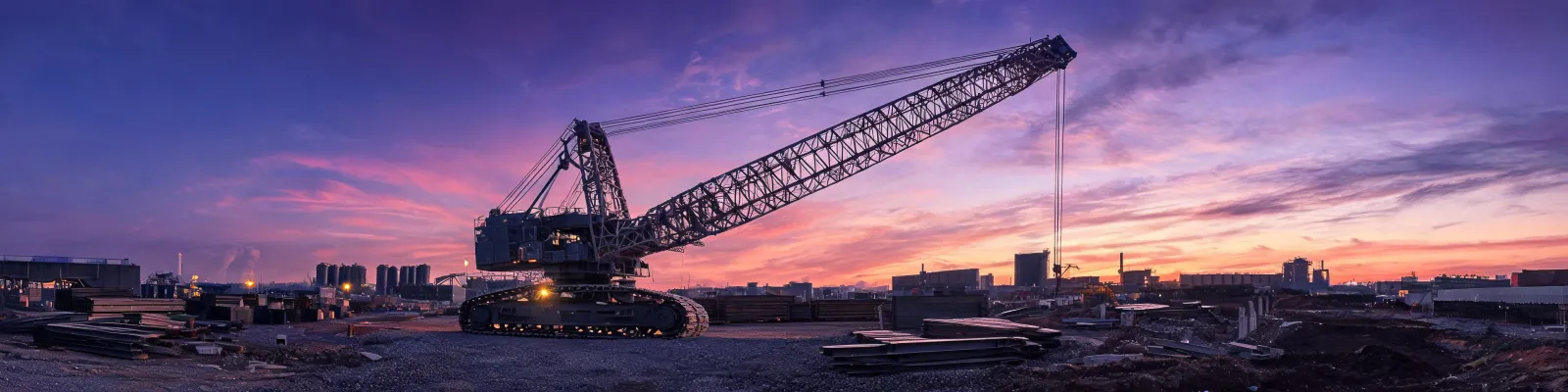
My first mistake was embarrassingly basic. We needed a replacement load hoist for our used Manitowoc 999 lattice-boom crawler. I typed "Manitowoc parts" into a search engine, and the whole first page came back as ice machine parts. Ice machine compressors. Ice machine evaporators. I sat there for twenty minutes convinced the crane industry had silently rebranded itself as commercial refrigeration.
It turned out that Manitowoc the crane maker and Manitowoc the ice machine maker are separate businesses that share a name. That afternoon was a waste of time, but it was harmless. The mistake that followed was not.
The hoist specification I didn't ask about
Our usual parts supplier quoted an OEM hoist at $8,200 with a six-week lead time. A second supplier offered a "compatible" unit for $3,500, available in two days. Same mounting footprint, they said. Plenty of line pull, they said. (They didn't say anything about how long the gears would last.)
I asked the questions a lift supervisor would ask: line pull, drum capacity, wire rope diameter. I didn't ask about duty classification. I didn't ask how the manufacturer rated the unit for sustained work cycles. And I didn't ask what engineering documentation came with it.
This is the blind spot I still cringe about. I checked the numbers I already knew and missed the numbers that only show up in the fine print.
Here's the part I didn't know: hoists are rated for duty service classes, not just maximum pull. A hoist that works fine in a shop or a maintenance bay is not necessarily a hoist that can run thirty lifts a day on a production job. The "compatible" unit we bought sat a full duty class below what our rental work demanded.
We installed it in July 2023. It made noise around week eleven. (Week eleven. I've got that date in the service log.) By week fourteen, it failed completely—scored gears in the planetary set. We had a water treatment plant job in the middle of a critical lift sequence. The customer had a tight weather window. We missed it.
Let me show you what $3,500 in savings actually cost us:
- $3,500 for the part that failed
- $1,950 in labor for removal and reinstall
- $2,300 for an emergency rental to cover the job
- $6,400 in lost revenue during the week we were down
That's $14,150. Roughly $14,000 if you ignore the smaller headaches. Not saved. Spent.
When I called Manitowoc's parts and service line, I expected to hear "we told you so." Instead, the application engineer asked what duty cycle we were running. Lifts per day. Average load as a percentage of rated capacity. Hours per day. She didn't just sell me a replacement—she helped me figure out what the machine actually needed, including a brake torque specification I'd never heard of and definitely never checked.
The OEM hoist wasn't cheap. But the documentation was worth something: a spec sheet with duty classification, a warranty I could actually read, and an engineer who knew how the part behaved on a full-size crawler crane. I do not want you to hear that OEM is the only option. I want you to hear that I should have verified every number on the sheet before I spent the first $3,500.
The crane truck compliance check I forgot
A few months later, we booked a job two states over and sent our truck crane down the highway. On paper, the axle weights looked fine. The permit folder was organized. The load chart was current. The operator had a valid CDL.
Here's what wasn't fine: we'd added a spare hoist drum and a set of outrigger floats to the bed without re-weighing the truck. The drive axle was 4,350 pounds over. Counterweight securing chains weren't attached to rated anchor points. And the annual DOT inspection sticker—which felt like a formality until that moment—had expired nine days earlier.
The officer didn't care that we were "almost done" or that the haul was "just a short one." Three citations. $2,300 in fines. A nine-hour delay on the shoulder while we waited for a second truck to come take the excess weight. And a client who had to push his mobilization by a day.
Here's what they don't print on the inspection form: crane truck compliance is about the combination, not just the crane. GVWR, axle weight, cargo securement under 49 CFR Part 393, current annual inspection under FMCSA rules, and in many states, oversize/overweight permits before the truck moves. Every single item has to be verified while the truck is still in the yard—not after a trooper has walked around it.
The crane itself also has to meet the applicable ASME B30.5 requirements for mobile cranes, and if it's used in construction, operator certification and rigging procedures fall under OSHA's 29 CFR Part 1926 Subpart CC. I knew that as a supervisor. I apparently needed a reminder as an owner.
Regulatory citations are current as of early 2026; verify requirements with your state DOT and FMCSA before you haul.
Almost bought a private-label terrain crane
By the start of 2025, we'd recovered enough to think about a third machine. We wanted a rough-terrain crane for utility and site-work customers. That's when a regional importer sent me a quote for a private-label terrain crane.
The numbers looked appealing: roughly 60 percent of the price of an established brand, same nominal capacity class, a shiny brochure, and a fast delivery date.
A year earlier, I might have signed immediately. Instead, I looked at the spec sheet the way I now look at everything. What's the hoist duty classification? What's the FMVSS status of the carrier for road use? Does the documentation include a compliance statement? And if I need a part in four years, who answers the phone?
The importer's sales rep asked me what FMVSS stood for. That answered the question well enough. Maybe I dodged a bullet, maybe not. But I'd stopped making decisions that relied on "probably." I'm not saying every private-label crane is a bad deal. I'm saying I didn't want to be the one who found out whether that one was.
I bought a Grove rough-terrain crane from a dealer who could show me every number on the spec sheet, stock the parts, and route me to an application engineer when I needed one. (Grove is part of the same Manitowoc Cranes family, by the way.)
Small orders still get the same respect
One more thing surprised me. When I called the dealer to order some small parts—a harness, an operator's manual, a replacement rope spool—I expected to be low priority. Instead, the person who answered took the order, verified the part numbers, and e-mailed a tracking number the same day.
I've placed $40,000 orders that got handled with the same seriousness as a $900 order. Small doesn't mean unimportant. It means you're a customer who might become a big one. The vendors who took my small orders seriously are the ones I still call when the order is much larger.
The checklist I now run on every purchase
- Full spec sheet or it doesn't get approved. Hoist duty classification, line pull, drum capacity, brake torque, wire rope specs. If a supplier can't produce a signed specification sheet, that's the answer.
- Compliance before movement. Axle weights, permits, securement, inspection stickers. Weigh the truck before it leaves the yard, not after a trooper asks for the weight ticket.
- OEM means documentation. The extra cost buys an engineered spec, a warranty you can actually enforce, and someone who understands the machine's duty cycle.
- Private-label gets extra scrutiny. If the importer can't answer basic compliance questions in writing, you're not buying a bargain. You're buying a risk with a brochure.
One last clarification for anyone searching: the crane division and the ice machine division are different businesses that share a name. If you searched "Manitowoc ice machine parts," you've got the wrong Manitowoc. If you're looking for crane support, you've got the right one.
I still count every dollar in this business. And I still feel the sting of that $14,000 hoist mistake. But I've stopped confusing "expensive" with "not worth it." If this story helps one person check a duty classification, verify a tie-down, or ask what FMVSS stands for, then that mistake wasn't completely wasted.