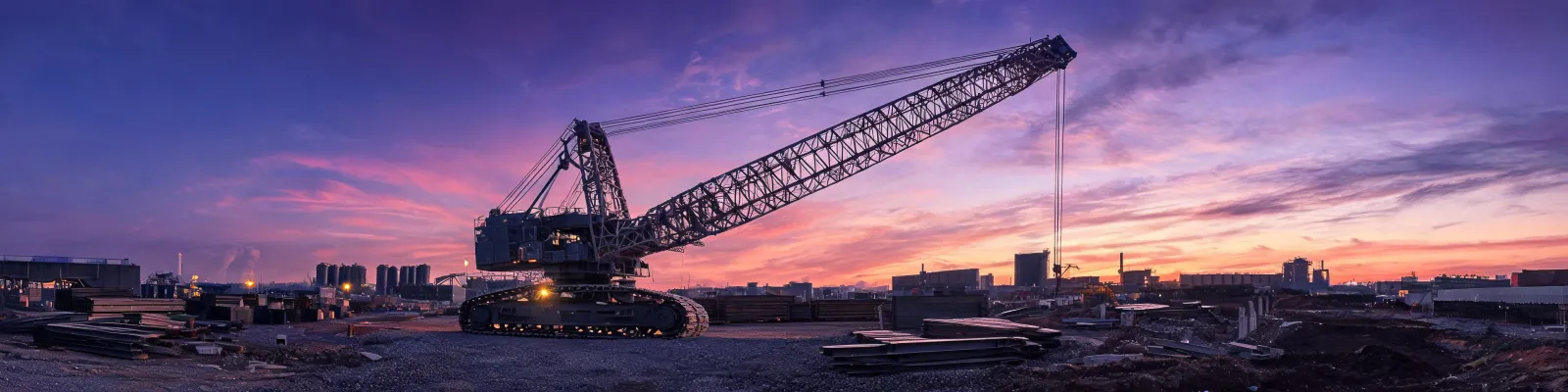
There is no single “right” crane purchase. The right answer depends on the lifts you’re actually booking, the fleet you already run, and how much risk your back office can absorb. I manage procurement for a mid-sized crane and rigging contractor—about $9M in equipment-related spend over the past 12 years. This guide is the conversation I wish someone had laid out for me when I started making these calls.
Quick note before we start: if you landed here because you’re looking for Manitowoc ice machine parts, that’s a separate product line. This article covers Manitowoc cranes—specifically the 16000-class crawler, mobile crane private-label decisions, and terrain crane wholesale cost planning.
Start With Your Lift Profile, Not the Price Sheet
When I first started managing equipment budgets, I assumed the lowest quote was the right route. Three budget overruns later—same story, hidden fees and support gaps—I learned to start with a lift profile instead. A lift profile is simply a summary of the heaviest lifts, the frequency, the site conditions, and the support requirements. It tells you which scenario you’re in before the price sheet gets in the way.
For this article, I divide crane decisions into three common scenarios:
- Scenario A — Specialty heavy lift: planned lattice-boom crawler work, such as a Manitowoc 16000 crane move.
- Scenario B — Wholesale fleet acquisition: buying multiple machines, including terrain cranes or a bulk crane truck, on a cost model.
- Scenario C — Private-label consideration: evaluating a mobile crane private label offer that promises similar performance at a lower entry price.
Scenario A: When the Lift Plan Calls for a Manitowoc 16000 Crane
A 16000 is not a nice-to-have. It’s a machine you justify one lift at a time. If the project schedule has one or two 16000-class lifts, it might be cheaper to rent. If your backlog shows several years of heavy lifts, the purchase case improves.
The 16000 is a lattice-boom crawler, which means it’s expensive to move, expensive to counterweight, and incredibly productive when set up correctly. It is not a good machine for a generic rental yard unless that yard already has the transport trailers, ground-bearing-capacity plans, and rigging inventory for large crawlers.
Cost items I see people miss:
- Freight and crane matting for moving the crawler to site.
- Ground pressure assessment—some sites need additional groundwork before the machine can travel.
- Erection and disassembly labor, including the assist crane.
- Project management time for lift-plan engineering review.
- OEM parts lead time for consumables and wear items.
From a cost-control standpoint, the non-negotiable step is to have a qualified engineer review the lift plan before you sign a purchase or rental contract. A 16000-class lift may require a different counterweight configuration or extra matting. That can add $10,000–$25,000 to a single move. Five minutes of verification beats five days of correction.
If the machine is for your fleet, ask the manufacturer’s applications team to walk through the load charts with you. The right answer is in the load chart, not in the brochure.
Scenario B: Terrain Crane Wholesale Cost Guide and Bulk Crane Trucks
This is where most of my budget goes. If you’re buying for fleet or rental, total cost of ownership matters more than the first invoice. I’ve compared dozens of quotes over the years, and the lowest “wholesale” number almost always has a catch: longer lead time, incomplete documentation, or a sparse parts network.
Terrain crane wholesale cost guide (2026): Based on quotes our team reviewed in 2025 and Q1 2026, a new 30-ton rough terrain crane from a known manufacturer typically runs $250,000–$400,000. A 50-ton class is often $400,000–$650,000. A 100-ton class can go over $1.2 million. Wholesale discounts for multi-machine orders are real, but they’re usually 10–20% off a configurable list price, not 40%. If someone quotes 40% below the market, ask why.
Prices are guidance only, not quotes. They vary by region, configuration, and time of order. Verify current pricing with your suppliers before budgeting.
For material handling on uneven job sites, a bulk crane truck can be the better tool than a terrain crane. A bulk crane truck is a truck-mounted crane with a bulk handling package—often used for pipe, precast, pallets, or aggregate buckets. It travels faster between sites and doesn’t require a lowboy. But it’s not a substitute for a rough terrain crane when the ground is soft and the lift radius is far.
This next observation sounds counterintuitive: don’t standardize on one machine type just to simplify the fleet. We tried that once. The standardization savings were eaten by rentals because we didn’t have enough reach for certain jobs. We ended up with a mixed fleet of terrain cranes plus one bulk crane truck. The cost model works because the machines cover different parts of the job.
Before you order, create a checklist for attachments, outrigger pads, operator manuals, and spare parts kits. A missing outrigger pad is a small item, but it can delay a job by a day. Prevention is cheaper than correction.
Scenario C: Mobile Crane Private Label Deals—What to Verify
I used to think private label was just the same crane with different paint. Sometimes it is. More often, the load chart, controls, component sourcing, and after-sale support are different from the OEM version. Everything I’d read about private label said you could save 20–30%. In practice, the size of that saving depends entirely on how much engineering and verification work you’re willing to do.
A mobile crane private label deal can make sense for an established buyer who plans to keep the machine for many years and has local service capability. It’s also how some large rental companies get a second source for popular capacity classes. If you have engineers on staff who can review load charts and you’re not dependent on the seller for support, the cost savings can be real.
But here’s the thing: documentation, load chart verification, warranty responsibility, and resale value are where a good deal falls apart. If the private-label manufacturer can’t provide load charts and supporting documentation that follow ASME B30.5, or if the owner’s manual isn’t complete, you have a liability problem. It doesn’t matter how much you saved on the purchase order. A crane without a complete engineering package is an asset you can’t safely insure, sell, or put into a rental fleet.
“A crane without a complete engineering package is an asset you can’t safely insure, sell, or put into a rental fleet.”
I’m not against private label. I’m against skipping the verification process. The 12-point checklist I created after a near-miss has saved us an estimated $80,000 in potential rework and liability costs. The first line of that checklist is: “Confirm the machine meets the same standard as the brand-name equivalent.”
Care about the plan after the first repair, not just the day the crane arrives.
How To Tell Which Scenario You’re In
Use these three questions to place yourself:
- Do you have defined heavy lifts that call for a 16000-class crawler in the next 18 months? Then start with Scenario A. A Manitowoc 16000 crane can be worth owning if it appears on your schedule repeatedly; if it’s a one-off, rent it.
- Are you buying multiple machines for a rental fleet or a materials-handling operation? Then you’re in Scenario B. Set your budget with a realistic terrain crane wholesale cost guide, and negotiate on support and lead time, not just price.
- Is the only reason you’re looking at a mobile crane private label deal because the entry price is lower? Then you’re definitely in Scenario C. Do not buy until you can verify the entire engineering package.
If you still can’t tell, get a lift plan and a machine availability study. Then compare the total cost of each option over a six-year horizon. Include purchase price, parts, inspections, repairs, freight, operator training, and expected resale value. When I audited our 2023 crane spend, I found that 18% of our budget overruns came from expedited freight and missing attachments. We now quote every attachment option before approving a machine.
Regulatory note: the U.S. OSHA construction crane rule (29 CFR Part 1926 Subpart CC) requires inspection, maintenance, and operator qualifications. ASME B30.5 is a commonly used standard for mobile crane safety. Regulations can change, so verify current requirements with official sources before making a purchase decision.
The best decision is one you can defend after a bad month. Verify before you buy. If you’re looking for a specific crawler like the Manitowoc 16000, ask the manufacturer’s applications team to put the load chart in front of you. For everything else, use a checklist.
Have a process, not just a hope. That’s how you keep crane costs under control.