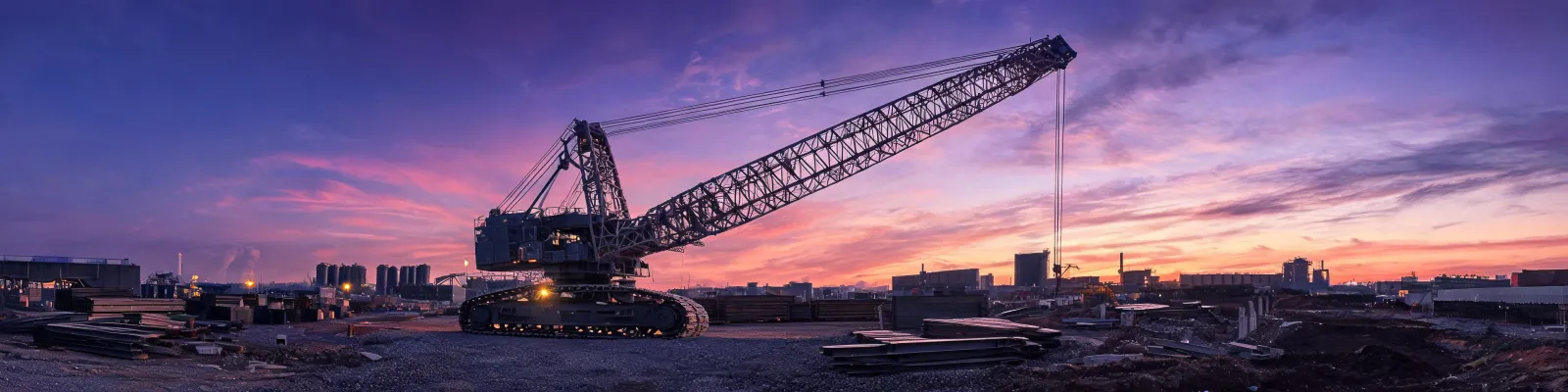
You're on site at 3 p.m. on a Friday. Your 120-ton crawler crane just showed a pressure drop in the boom hoist system. You search "Manitowoc OEM parts" and get two hits for the same hydraulic cartridge valve. Same part number. Same product photo. One is the authorized dealer at $1,850. The other lists at $1,250.
Which one do you buy?
If you said the cheaper one, keep reading. I made that exact call a few years ago. It cost us about $19,000.
Quick background: I'm a procurement manager at a 150-person construction contractor. For 6 years, I've managed a $2.4M annual equipment maintenance budget, negotiated with 40+ vendors, and logged every order in our cost tracking system. I'm not an engineer. I'm the person who signs the POs and lives with the consequences.
The Part That Looked Like a Steal
We needed four hydraulic cartridge valves for the boom hoist on a 120-ton lattice crawler crane. The OEM quote was $1,850 each. The alternate quote was $1,250 each — identical part number, "same quality." I called to confirm. "Same part, no brand markup," the sales rep said.
So I bought the cheaper ones. Saved $2,400 on paper.
Five weeks later, one leaked under load. We caught it during a pre-lift inspection (thankfully). Then came the real cost: sourcing a genuine replacement, swapping the seal kit, flushing the hydraulic circuit, re-inspecting the system, incident paperwork, and two days of the crane sitting idle while the correct part shipped.
Total: about $11,000. And that was the lucky version — nobody got hurt, and the failure didn't happen mid-lift.
Here's the assumption I made, and I see other procurement people make it every day: "same specifications" from different vendors means the same result. It doesn't. The dimensions match. The box is the same color. But what's inside can be engineered, heat-treated, and tested to completely different standards.
What 200+ Orders Showed Me
After that incident, I went back and audited six years of purchase records. I wanted to know where our "unexpected repair costs" actually came from. My instinct said engine overhauls, final drives, boom damage — the big dramatic failures.
Here's what I found: about 17% of unexpected repair spending traced back to parts we'd bought as lower-cost stand-ins for OEM components. Not fake parts, necessarily. Just parts that were similar enough at purchase time but didn't hold up under real working conditions.
And here's the pattern that surprised me: failures clustered in load-holding components — hydraulic valves, boom pins, swivels, hoist gearboxes. The cosmetic stuff like belts, hoses, and filters was mostly fine as an aftermarket alternative. But the higher the consequence of failure, the worse the "cheap" parts performed.
In the early days, I kept getting angry at suppliers for late deliveries and underspecified parts. After the third incident, I realized the problem wasn't them. It was my process. You'd think written specs would prevent misunderstandings, but interpretation varies wildly between vendors.
Put another way: what you're buying with an OEM part isn't just the metal. It's traceability, material certification, and a paper trail that leads back to the manufacturer if something fails. That's hard to put a price on, but the data says it has one.
The Real Price of Downtime
Let me make the numbers concrete. Our 120-ton crawler crane has an idle cost of about $1,800 per day in lost revenue — plus the equipment payment, which keeps running either way.
In 2023, we had a 55-ton mobile crane down for five days waiting on a $400 part. We told the supplier, "we need this by Thursday." They heard "whenever." The part arrived Tuesday. We rented a replacement crane at $2,400 per day, and the site schedule slipped a week.
By the time we counted labor, admin, and the ripple delay on two other subcontractors, it was about $19,000 — or roughly 47 times the cost of that part.
There's a compliance side too. OSHA requires cranes to be maintained in safe operating condition and inspected at regular intervals (29 CFR 1910.180; construction cranes under 29 CFR 1926.1412 — both on osha.gov). A failed non-certified component can trigger full re-inspection, third-party evaluation, and a pile of documentation. In one project, a $320 component failure caused three days of additional inspections. Three days.
The painful part? Every one of these costs was preventable with five minutes of verification at the purchase stage.
How I Buy OEM Parts Now
I still buy aftermarket parts for some things. But I don't go in blind anymore. Here's the system:
1. Check the part number against the OEM manual. Not the reseller's listing — the actual OEM parts manual. Cross-reference your machine's serial number. If the seller's part number doesn't match, walk away. That's a red flag.
2. Calculate total cost of ownership, not unit price. I built a simple calculator after getting burned twice (yes, twice). It factors in part price, expected lifespan, installation time, failure probability, and the idle cost of the machine. When you put real numbers in, a $1,250 valve with a 10% failure rate and two-day shipping isn't cheaper than an $1,850 OEM part with a 1% failure rate and guaranteed next-day availability. It's not even close.
3. Ask for certification before you pay. For anything load-holding or safety-critical, ask for a certificate of conformance from the manufacturer or proof of authorized dealer status. Legit suppliers provide it without a second thought. A hesitant seller is a no-go.
4. Keep a parts history log. Every part purchase goes in a spreadsheet: part number, supplier, date, machine hours, and whether it was replaced within 12 months. After two years, patterns show up. You'll know exactly which suppliers deserve your business and which ones don't.
The Top Manitowoc OEM Part Replacements to Track
Since "Manitowoc" tends to bring up both cranes and ice machines in search results, let me be specific. For Manitowoc cranes, the parts we replace most frequently across our fleet are: hydraulic filters, fuel and air filters, hydraulic cylinder seal kits, boom hoist wire rope, track pads and links, swing pinion gears, and swing bearing bolts. These are the components where I insist on OEM part numbers — because every one of them is tied to lift safety or structural integrity.
Picking a Crane Manufacturer Works the Same Way
The same logic applies when you're buying the crane itself. Whether you need a crawler crane manufacturer with a proven lattice boom line, a crane truck manufacturer for road-legal mobility, or — for wholesale buyers — a city crane that can handle tight urban sites, the question isn't only about load charts.
It's about whether the manufacturer can get you the right parts when a machine is down. A brand-new crane with a beautiful load chart doesn't help you if a critical replacement part takes three weeks to arrive. That's why when we bought our latest lattice boom crawler crane, we compared support infrastructure just as hard as the specs: parts availability, dealer proximity, service technician capacity.
Ask pointed questions. "What's your average delivery time on critical parts?" "Where's the nearest service center?" "How many machines does each technician support?" The answers tell you more than any brochure. We ended up standardizing partly on Manitowoc cranes because their OEM parts network came through when we needed it, time after time (the 2250 crawler crane is a workhorse in our fleet). But I've run Liebherr, Terex, and Zoomlion equipment too. The brand matters less than the procurement process around it.
Five minutes of verification costs nothing. Five days of downtime costs thousands. The math is never close.
So bottom line: cheap parts are only cheap until they fail. Do the verification, do the math, and buy the part — or the crane — that'll still be working next year.