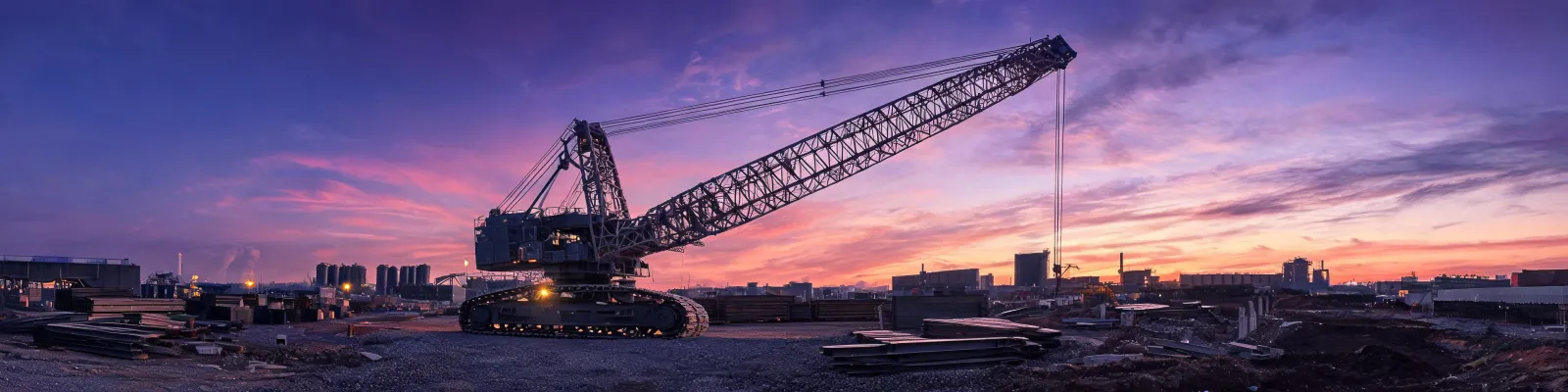
After six years of tracking every crane-related invoice, repair ticket, and hour of downtime, I can say this without hesitation: the OEM route saves money over the full ownership cycle. For most lifting applications, choosing an OEM crane distributor like Manitowoc over a private-label supplier is the lower-cost decision in the long run—even though the ticket price is higher. In our fleet, switching the majority of parts and service to OEM-backed distribution cut total crane ownership cost by about 18% annually.
Why you should listen to me (or not)
I manage procurement for a construction and crane rental company with about 45 employees. I've handled roughly $1.2 million in crane-related purchases and repairs over six years—no, $1.35 million, I'm counting the new crawler we bought in late 2025. I keep every quote, PO, and repair ticket in a spreadsheet, which is why I can tell you exactly where the money went. My natural instinct as a cost controller is to chase the lowest price. But the data convinced me to look beyond the sticker.
When I audited our 2023 spending, I found that 14% of the equipment budget went to emergency repairs and rush freight. That looked absurd. Most of those emergencies traced back to cheaper parts that failed earlier than OEM replacements. So in 2024 and 2025, we built a formal comparison process: we tracked failure dates, downtime hours, and follow-up labor for every part that moved.
OEM vs. private label: what the spreadsheet showed
Consider a swing pinion for a 50-ton mobile crane. A private-label supplier quoted $2,100; the OEM distributor quoted $2,850. The private label seems attractive. But here's what the columns captured:
- Private-label pinions failed at roughly twice the rate of OEM in our fleet—four issues out of 12 installations, versus two out of 13.
- Each failure took an average of 1.5 days of crane downtime. At our blended billing rate, that's $1,800–$2,400 in lost revenue per day.
- OEM parts came with inspection sheets and traceable lot numbers, which made our OSHA and customer audits painless.
The most dramatic difference was availability. In November 2025, when a crawler threw a hydraulic seal, the OEM distributor had the part in a regional depot and the crane was running the next morning. The private-label supplier said three to five business days. So glad I verified lead times before approving that order—one more day of downtime would have blown the project schedule.
That's the counterintuitive part: a $750 premium on one part can prevent a $2,000 loss in a single day. Multiply that by a few failures a year, and the OEM route pays for itself. Between 2024 and 2025, our emergency repair spending dropped 23% after we standardized on OEM components for critical lift gear.
How to calculate your own TCO
If you want to run this analysis yourself, track five numbers for every critical part or service: unit price, average annual failure rate, typical downtime in hours, your blended hourly billable rate for the crane, and the cost of documentation or inspection delays. In our experience, the OEM premium becomes negligible once downtime enters the formula. You'll likely find, as we did, that a 15% cheaper component is often 50% riskier in the field.
Quality bleeds into your brand image
I also learned that quality affects how clients see you. On a downtown high-rise job, the general contractor's site manager said, "Glad you're running a Manitowoc, not one of those bolt-together rigs." He wasn't a crane expert, but he knew the name. That one sentence probably earned us more trust than our safety slogan ever did.
It's not status. It's perception. When a client sees mismatched paint and third-party parts, they assume the maintenance program is sloppy. And in construction, trust is the product. That's why I treat quality investments as marketing, not as optional spending.
City crane distributor considerations
If you're a city crane distributor, your environment is even more unforgiving. Tighter site constraints, noise ordinances, stricter inspections. Urban jobs also carry penalty clauses for downtime. There's no "we'll come back next week" when you're working over a street closure. You need a distributor who can get parts to a jobsite fast. In our internal analysis, local availability weighed as heavily as price. Actually, it weighed more.
We follow OSHA's Subpart CC and ASME B30.5 guidelines. Those standards don't require OEM parts, but they do require that critical components maintain their original design integrity. OEM parts make that easier to prove. I've been through two OSHA inspections, and the documentation that came with OEM components ended the questioning immediately.
When private label makes sense
To be clear, I'm not saying never buy private label. For non-critical components like fenders, mirrors, or wear pads that don't affect load holding, a good private-label brand can save 20–30% without adding meaningful risk. And when you own machines the OEM no longer supports, private-label may be the only available option. Just budget for more frequent inspection and document everything.
Bottom line
When someone asks me OEM vs. private label, I tell them to build the total cost model. Include the purchase price, expected life, failure rate, downtime billable rate, and the potential damage to your reputation. Do that with real numbers, and the OEM route wins in the vast majority of crane applications—not because it's premium, but because it's predictable.
P.S. If you landed here looking for Manitowoc ice machine parts or a water filter replacement, this is the crane side of the company. The ice machine business is separate. You'll find authorized parts on Manitowoc Ice's official site—no need to wade through crane articles.