The call that always comes too late
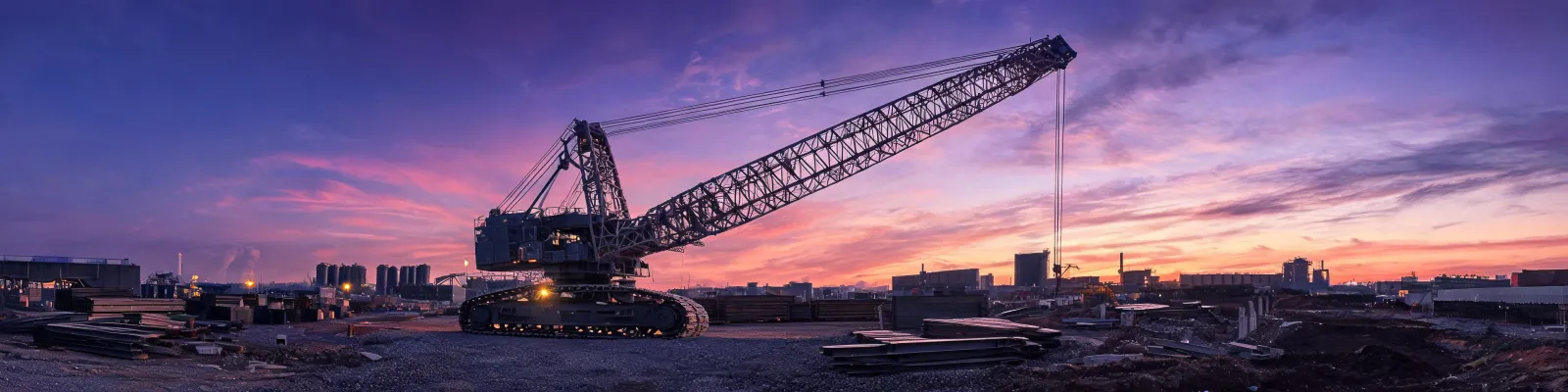
It's 2 a.m. A job site outside Chicago. A crawler crane is stuck mid-lift, and the hydraulic unit on a Manitowoc 16000 just failed. Or someone's overhead crane supplier sent a hoist that doesn't match the spec. Either way, the phone rings, and the first three questions are always the same: How fast can we get the part? How much will it cost? Can it be on-site by morning?
I've taken a lot of those calls. And after handling roughly 200+ rush jobs in this industry, I can usually guess what's coming next. Most of them weren't emergencies. They were decisions made months earlier that only looked like bad luck when they finally broke.
That's what I want to talk about — not the phone call, but everything that made the phone call inevitable.
First, a naming problem worth clearing up
When people search for "Manitowoc crane parts for sale" or "Manitowoc ice machine parts," the results often get mixed together. They're not the same business. Manitowoc's crane division and the Manitowoc foodservice line (ice machines, etc.) operate as separate entities with separate supply chains and separate dealer networks. If you're hunting for ice machine parts, you want the foodservice channel. If you need a lattice-boom crawler part, you want the crane side. Confusing the two is one of the quieter ways people lose a day before the real sourcing even starts.
This article is about the crane side only. If you're on the ice machine side, that's a different conversation.
Why "urgent" orders show up when they do
I've handled emergency parts sourcing and equipment purchases across a range of project sizes, from a $500 hydraulic fitting to a seven-figure equipment replacement. The pattern behind them isn't random. It falls into three buckets, and none of them are actually about speed.
Reason 1: The need existed long before anyone noticed
Cranes wear on predictable cycles. Wire rope, brakes, hydraulic hoses, swivel assemblies — if you know the duty hours and the last service record, you can forecast when a component is going to fail. But purchasing pressure usually pushes maintenance planning to the back of the queue. So the part gives out mid-lift, and suddenly it's a crisis.
Based on what I've seen come through wholesale crane parts channels, I'd estimate somewhere around 70% of "emergency" parts orders trace back to a machine with no on-hand spares — meaning the emergency was scheduled in advance. The exact number depends on fleet size and industry segment, so treat that as a rough pattern, not a benchmark.
Nice catch — no, I don't have public data on that. It's what comes through my desk, nothing more.
Reason 2: The original purchase was the wrong purchase
Sometimes the emergency isn't a failed part. It's that the equipment spec was wrong from day one.
Wrong capacity. Wrong boom length. Wrong configuration for the site. Or a used unit bought without a real condition report. Then the machine arrives, and it can't do the job — so now you're calling crawler crane wholesale channels in a rush, trying to source something that should have been planned six months out.
The number of "needs it by Friday" equipment calls I've gotten that were really January decision errors... that one still surprises me.
Reason 3: The OEM vs. private-label question nobody answered
This one gets glossed over a lot. Hoist OEM vs. private label isn't just a pricing question — it's a liability structure.
OEM means the part is built to the original manufacturer's design spec, backed by traceable bills of material, warranty terms, and engineering support from the equipment maker. Private-label means a third party builds something to a similar — or similar-looking — design. Cheaper up front. Weaker traceability. Different warranty story.
For non-critical applications, private-label is often fine. For primary hoist systems on high-cycle lifts, it's a bet that usually gets paid back twice. Under ASME B30.5 (mobile and locomotive cranes) and OSHA 29 CFR 1910.179 (overhead and gantry cranes), the engineering and inspection responsibilities sit with the equipment owner — not the parts seller. So when something fails, that responsibility doesn't disappear because the part was cheap.
I've watched contractors save a few hundred dollars on a private-label hoist assembly, then eat a second failure six weeks later that took out an adjacent component. Two shutdowns. Two rush freight bills. Plus an equipment replacement.
What the emergency actually costs
This is the part most people underestimate.
A crane sitting idle isn't paused. It's burning. Depending on tonnage and rental terms, a mid-size crawler down for repairs runs roughly $2,000–$8,000 per day in direct costs alone (based on rates published by major crane rental marketplaces, early 2025 — verify current figures before you budget).
Stack on top of that:
- Rush freight (often 2–4× standard, sometimes more if it's air)
- Crew idle time
- Milestone penalty clauses — commonly $5,000–$50,000 per hit on large infrastructure jobs
- Secondary damage if the wrong part caused the initial failure
In March 2023, a client called me about a 2250 that lost main hoist function mid-lift. We sourced the part, air-freighted it, and got them running again in about 36 hours. The rush premium came out to roughly $3,800 on top of a standard order. The alternative was a delay that would have triggered a milestone penalty worth around $27,000.
That math isn't the surprising part. What surprised me was how many of those calls I kept getting — because the rush premium is only expensive when you don't have a rush option. When you do have one, it's almost always cheaper than the delay.
The fix (short, because the problem already said enough)
Every solution I've seen work points to the same thing: build the supply relationship before you need it.
Specifically:
- Map your critical spares ahead of failure. Know which components are wear items on your fleet. Know their duty cycles. Have a plan that isn't a phone call at 2 a.m.
- Know who your suppliers actually are. A great crawler crane wholesale partner may not be the right overhead crane supplier for a different project. And the shop that knows Manitowoc crane parts cold may not be the right fit for a rebuild. Being honest about that is cheaper than pretending otherwise.
- Find out what your supplier won't do. The vendor who tells you "that's not our strength — here's who does it better" is the one you should trust with everything else. I'd rather work with a specialist who knows their limits than a generalist who promises everything.
- Know when OEM vs. private label actually matters. Primary hoist, critical structural, safety-rated components: go OEM. Secondary, non-cycle-critical: private label can make sense. But make that call deliberately, not by default.
That's it. The trick was never finding the cheapest part faster. It was never needing to find one at 2 a.m.
I've handled well over 200 rush jobs. Maybe 20 of them were genuinely unavoidable. The rest trace back to something decided three, six, twelve months earlier — by someone who just hadn't made the time yet.
Fix the upstream decision, and the downstream emergency has nothing to attach to.