-
The $280,000 "Bargain" That Nobody Budgeted For
-
The Thing Nobody Prices In
-
Deep Cause #1: Parts Traceability Is the Hidden Spec
-
Deep Cause #2: Bulk Tower Crane Purchases Amplify Small Errors
-
Deep Cause #3: Search Terms Hide Two Different Businesses
-
What This Actually Costs You, In Real Numbers
-
The Short Version — What to Actually Do
The $280,000 "Bargain" That Nobody Budgeted For
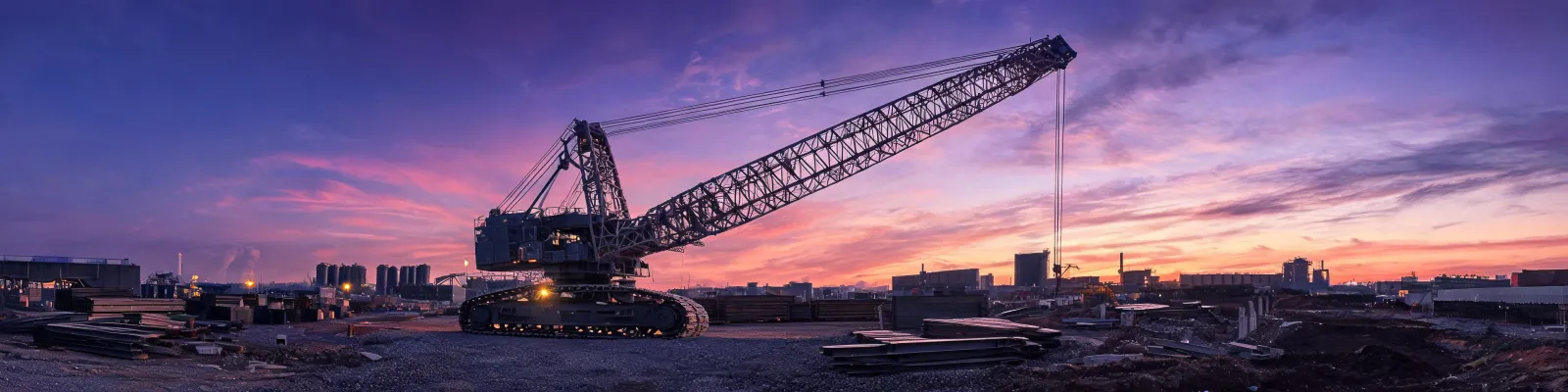
Two months ago, a mid-sized contractor walked into our yard with a stack of photos. She'd bought a used lattice-boom crawler crane back in March 2024 — 250-ton class, 2016 build year, hours within spec — roughly 35% under comparable listings. The seller said "fully serviced."
What she actually got: a hydraulic leak in the boom hoist. A boom section with a weld that didn't match factory geometry. And no OEM parts documentation for any of it.
By July, the repair quote from a third-party shop came in around $94,000. The OEM service route came in higher. And here's the part that finally stopped her from smiling — that crane had no resellable service record, so the resale value she'd been quietly counting on evaporated. She didn't buy a crane. She bought a $280,000 problem with a paint job.
I do this for a living. I'm the quality and brand compliance manager at a crane distribution company. Roughly 200 machines a year pass across my desk. In 2024, I rejected about 18% of first-pass deliveries — not because the iron was bad, but because the story behind it wouldn't hold up.
And that's what I want to talk about. Because the question "how to choose a used crane" is the wrong first question. The problem isn't up front — it's buried.
The Thing Nobody Prices In
Most people shop by comparing quotes. Same tonnage, same year, lower number wins. Right?
That framework works for buying a pickup truck. It falls apart on heavy equipment — especially large crawler cranes and bulk tower crane procurement — because the sellers aren't selling you the same thing, even when the spec sheets match.
What you're really buying is a verifiable history. And that history is made of three things: parts traceability, service chain, and where the machine has actually lived. Miss any one of those, and the risk silently transfers from the seller to you.
Deep Cause #1: Parts Traceability Is the Hidden Spec
Every listing says the same things: model, build year, hours, boom length, counterweight, last service. "Recently serviced" gets printed like a warranty badge. Everyone reads it as one.
What most people don't realize is that "recently serviced" has no enforced meaning. It could mean an OEM-trained tech pulled the swing gearbox and resealed it to factory torque specs. Or it could mean someone greased the swing pinion and called it a day.
The cost difference between those two activities is five figures. You'll find out which one you got the next time you lift.
My first question about any used crane isn't the price. It's this: show me the parts list. Show me the originals. Show me the serial number on the last OEM replacement. Show me the hydraulic oil hours. Most listings stall right there — and often it isn't because the seller is lying. It's because the previous owner didn't keep records.
Here's the uncomfortable truth: no records doesn't mean "nothing was wrong." It means nobody can prove what was fixed, or how.
Deep Cause #2: Bulk Tower Crane Purchases Amplify Small Errors
This one's counterintuitive. Contractors assume buying five or ten tower cranes at once gives them pricing leverage. It does. It also multiplies risk by the same factor.
If one used tower crane has an incomplete swing brake history, buying one puts one project at risk. Buying eight puts eight projects on the same failure mode.
I watched a subcontractor do this in 2023 — roughly six units from a used crane distributor, all for a residential cluster on the city's west side. The listing price was beautiful. What wasn't obvious: four of the six belonged to the same production block, same year, interchangeable components. Same wear pattern on the main slewing pins. By year one, five of them had swing system issues. The repair round cost more than buying newer machines through a verifiable channel would have.
Granted, the buyer couldn't have known that from the spec sheet alone. That's the point. The spec sheet didn't contain the information that mattered.
Deep Cause #3: Search Terms Hide Two Different Businesses
This one sounds off-topic. It isn't.
I constantly see people searching for Manitowoc parts who end up on the foodservice side of the business — commercial ice machine components — because the search phrase "manitowoc ice machine parts" happens to overlap phonetically and alphabetically with "Manitowoc crane parts." Same brand name. Completely different supply chain. Completely different compliance paperwork. Completely different service technicians.
I've watched procurement staff land on a Manitowoc ice machine parts page, download a parts diagram, and email it to a heavy equipment mechanic. Twice. Within a month.
If you're sourcing Manitowoc crane repair services, lock the word "crane" into your search string. Don't type the brand and let the search engine guess. It won't guess right.
What This Actually Costs You, In Real Numbers
Here's where the pain hides.
When I compare total cost of ownership for used cranes, I don't use purchase price. I use this:
- Acquisition price
- Freight, assembly, and site commissioning
- Baseline inspection (assumed unknown condition)
- Deferred repairs that surface on the critical path
- Compliance and insurance premium impact
- Resale value at end of use
In 2022, I ran that calculation on two comparable lattice-boom crawler cranes. One came with full OEM service records; one didn't. The undocumented unit was listed about $60,000 lower. After all-in costs, it actually cost roughly $45,000 more to own over its remaining cycle — mostly from downtime, emergency freight, and the eventual resale haircut.
People think the higher-priced crane is more expensive. Actually, the crane that can prove its history is the cheaper one. The causation runs the other way.
To be fair, not every third-party repair shop is a problem. Some do excellent work. The issue isn't who did the work — it's whether the work leaves a paper trail you can hand to the next buyer. Plenty of reputable shops do. Just ask before you commit.
The Short Version — What to Actually Do
I'm not going to hand you a 40-point checklist. Here are the four things that move the needle:
- Request documentation before you request a quote. No OEM parts list, no service history, no hour log — treat it as disqualified. Not because the machine is bad. Because you can't prove it isn't.
- Calculate total cost, not sticker price. Build the number yourself: purchase + freight + baseline inspection + likely repairs + resale delta. The winner changes more often than people expect — especially on bulk tower crane deals.
- Stay inside a verifiable service chain. Not every job needs OEM. But every job needs a paper trail with serial numbers. That trail is what you're selling later.
- Search precisely. "Manitowoc crane repair services" and "manitowoc ice machine parts" are two different supply chains. Mix them up and you'll waste a week chasing the wrong parts diagram.
I've seen it enough times now: the cheapest used crane on the listing page is very often the most expensive one on the project. Not because anyone set out to scam you — because the buyer priced the machine and forgot to price the history.
Price is the tip of the iceberg. What sinks the budget is everything under the waterline.