-
What I'm Actually Comparing (and Why)
-
Dimension 1: Ground Conditions — Where Each Crane Actually Belongs
-
Dimension 2: Transport and Setup — the Line Item Nobody Quotes Honestly
-
Dimension 3: Boom Configuration and Lifting Reach
-
Dimension 4: Parts, Service, and the "Manitowoc" Name Problem
-
So Which One Do You Actually Order?
What I'm Actually Comparing (and Why)
I'm the office administrator for a 240-person crane rental and heavy rigging company. I don't run the cranes—I run the paperwork that gets them to the job. That means I'm the one pulling the mobile crane catalog, comparing spec sheets, chasing OEM parts quotes, and explaining to our finance team why one crane cost $40K more to mobilize than another on the same project.
So when people ask me "2250 or a bulk terrain crane?" I don't answer from the operator's seat. I answer from the invoice. That turned out to be more useful than I expected.
Here's the comparison framework I use. Four dimensions, each one showing up on your P&L somewhere:
- Ground conditions and site prep — affects civil work cost
- Transport and setup — affects mobilization line items
- Boom configuration and capacity — affects whether you can bid the job at all
- Documentation, parts, and service — affects the 3 a.m. phone calls
I'll go through each one with the Manitowoc 2250 crawler on one side, a typical bulk terrain crane in the same tonnage neighborhood on the other. I'll tell you upfront: the answer isn't "one wins." It's more specific than that, and one of my conclusions actually surprised me.
Dimension 1: Ground Conditions — Where Each Crane Actually Belongs
Every spec guide I'd read said the same thing: crawler cranes need firm, prepared ground; terrain cranes are more forgiving of uneven sites. I believed it for two years. Then I watched our 2250 sit on timber mats over reclaimed fill ground for a six-week bridge project, and the terrain crane we'd tentatively scheduled ended up mobilizing a second load of outrigger pads just to be safe.
In practice, the 2250's ground pressure is spread across a full track footprint. Yes, it's heavy. But the load is distributed differently than four outrigger points punching into soft soil. On sites where the soil report was sketchy but the client wouldn't fund a full matting plan, the crawler ended up being the easier approval, not the harder one.
Where the terrain crane wins: hardstand, urban jobs, and sites where you're rolling onto existing concrete. No mats. No prep crew. Show up, outriggers down, lift. For a short-duration job on a parking deck or a plant pad, the terrain crane is a day or two faster to a safe lift.
Comparison conclusion: If your site is "uncertain and remote," the crawler with proper mats is often the cheaper safe option. If your site is "tight and already paved," the terrain crane is the faster one. The spec-sheet version of this story gets it half right.
Dimension 2: Transport and Setup — the Line Item Nobody Quotes Honestly
This is where the 2250 starts costing money before it lifts anything. Counterweights come off. Boom sections come off. Depending on the configuration and local permits, you're looking at multiple truckloads just to get it to the site. Then it reassembles. Then you don't move it again for the duration.
A bulk terrain crane of comparable class usually travels as itself—plus a support truck. It rolls down the road, sets up its outriggers, and lifts within an hour or two of arrival. If your job moves locations every week (think wind farm, pipeline, or a series of small lifts across multiple substations), that difference compounds.
I don't have hard figures on every region, but based on what I've processed in our own accounting, mobilization for a 2250-class crawler is routinely 2.5–4x the line item of a comparable terrain crane on identical job distance. That number includes trucks, permits, crane assist, and the crew hours for assembly/disassembly.
Everything I'd read said "crawler cranes are for the long jobs." In practice, they're for jobs where you can't afford to move the crane—not because they're slow, but because every move is a three-day event.
Comparison conclusion: Single-site, long-duration jobs → 2250 economics win decisively. Multi-site, short-duration jobs → terrain crane economics win. Getting this wrong is the number one way these decisions blow up a project budget.
Dimension 3: Boom Configuration and Lifting Reach
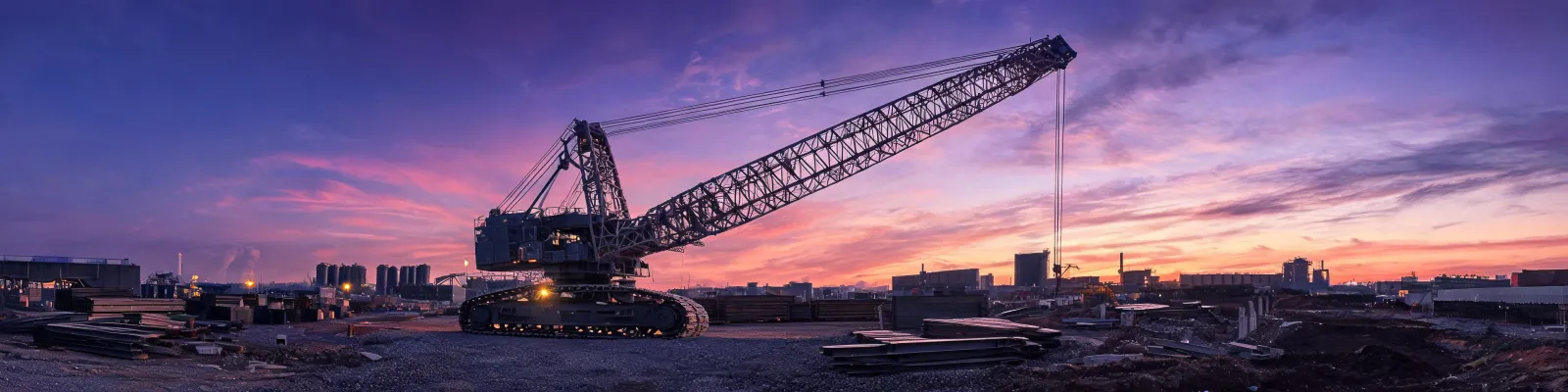
The 2250 uses lattice boom. That's the point. It's bought for reach, for heavier long-radius picks, and for configurations that a telescopic boom physically can't match—particularly once you're talking about long main boom with luffing jib combinations. If your lift is a heavy pick at 80–120 meters of radius, terrain cranes in the same nominal tonnage class usually can't play in that game with the same margins.
Bulk terrain cranes trade that reach for speed. Telescopic boom goes up in minutes. Lattice assembly is a scheduled event. If your lifts are within ~50–60 meters of radius and lighter, the terrain crane will often do the job and do it faster.
A note on the spec guide itself: the Manitowoc crawler crane specification guide is worth pulling from the manufacturer directly, not from a dealer summary. The chart conditions matter more than the headline tonnage. I've seen proposals where someone quoted a chart line without the counterweight configuration listed, and the number was 30% off from a real lift chart.
Comparison conclusion: If reach and heavy long-radius picks are the core of the job, the crawler 2250 is the answer and there really isn't a terrain-crane substitution. If you're doing general heavy lifts inside a tighter envelope, don't pay the crawler premium for capability you won't use.
Dimension 4: Parts, Service, and the "Manitowoc" Name Problem
Here's a real trap I've hit twice, and both times it cost the company time.
"Manitowoc" is used across two completely different industrial businesses. One is the crane group—Manitowoc cranes, lattice boom crawlers, mobile cranes, OEM parts and service. The other is the foodservice equipment line—ice machines, refrigeration. Same word, totally different supply chains, different distributors, different parts portals.
If you type "manitowoc ice machine parts" into a search bar while you're trying to source a hydraulic filter for a 2250, you'll get a page of restaurant equipment. I've watched a junior buyer do exactly this and waste half a day. Not a crisis. But worth flagging because it happens.
On the crane side, the practical things I check before any 2250 goes out:
- Is the OEM parts channel active for this serial? Older 2250s are still running fine, but parts availability on some components has shifted. Verify current lead times, don't assume.
- Does the service tech have current certifications for this class? Not every third-party tech works on this size machinery.
- Is the load chart the one that matches the actual configuration on the crane? This is a safety and liability item, not a paperwork item.
I wish I had tracked more carefully over the years how often a parts delay pushed a lift date. What I can say anecdotally is that it's frequent enough that we now require a parts-availability check before we commit a crawler to a hard-scheduled lift.
Comparison conclusion: On parts and service, this isn't really a crawler-vs-terrain question. It's a Manitowoc-vs-everyone-else question, and Manitowoc's OEM support is a genuine strength for people running their equipment long-term. But you have to actually use it, not just assume it's there.
So Which One Do You Actually Order?
This was accurate as of early 2025. Transport rules, permit thresholds, and parts lead times shift—verify current specifics before you commit a budget to either option.
My working rule, refined over the last several years of processing these orders:
Order the Manitowoc 2250 crawler crane when:
- The job is single-site and long-duration (multi-week or multi-month)
- Lifts involve heavy picks at extended radius
- Ground is uncertain and matting is acceptable
- You need lattice boom configuration options that telescopic can't match
Order a bulk terrain crane when:
- The schedule involves moving between multiple sites
- Ground is paved or firm and outrigger-ready
- Lifts fit within a tighter radius and moderate weight envelope
- You need to be lifting on day one, not day three
Where I've seen companies get this wrong: buying the crawler for a project that looked long-duration on the bid but got rescheduled into three short phases in different locations. The crawler never got to the second site without a mobilization invoice. That wasn't the crane's fault. It was a planning failure.
Bottom line: the 2250 is a specialist tool, and it earns its cost when the job genuinely needs what it does. The terrain crane is a generalist, and it earns its cost by being cheap to move and quick to set up. Match the tool to the shape of the work, not to the tonnage on the nameplate. That's the part of the spec sheet nobody prints.