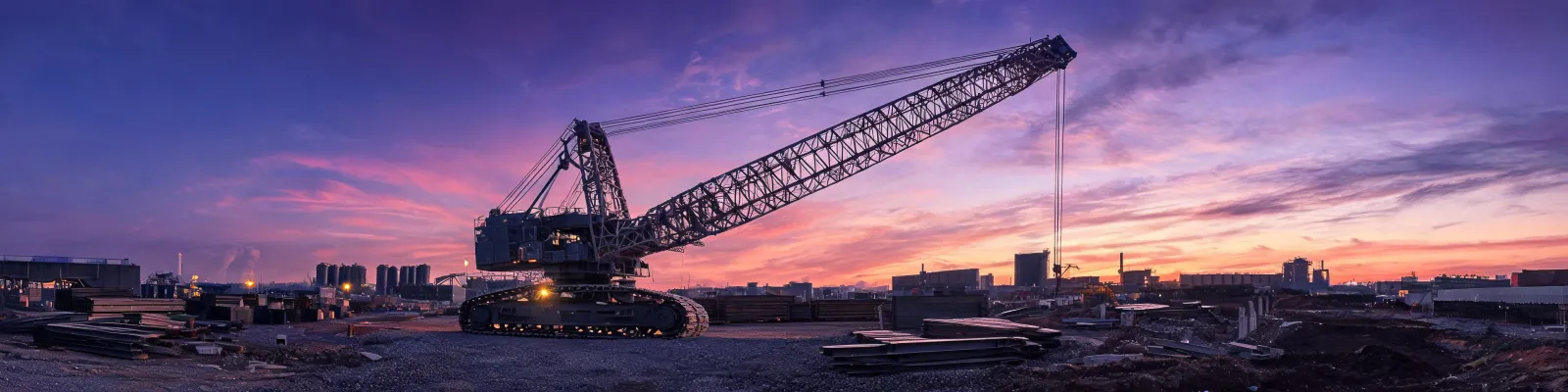
If you're choosing a crane for wholesale by comparing price per ton, you're already losing
I'll just say it. The cheapest crane on the bid sheet is almost never the cheapest crane in the yard three years later. The acquisition price looks great. The math changes once you're waiting on a hydraulic part or arguing with a rental client about downtime credits.
I've spent over four years reviewing crane specifications and compliance documentation before they go out to customers — roughly 800 spec and compliance packages since I started, and a decent chunk of those were claim files. The claim files are where you learn things. Nobody writes a case study about the crane that ran for 400 days without a hiccup. They write one about the crane that sat idle for eleven days because a boom section gasket came from overseas.
So when a contractor sends me a message asking "how to choose ton crane for wholesale" or "which crane manufacturer has the best price," I kind of wince. Because that's the wrong first question.
What actually drives total cost (and no, it's not the invoice)
Here's a rough breakdown from our own internal audits — and this lines up with what I hear from rental fleet managers at industry events. On a typical 200–400 ton crawler, over a five-year ownership window:
- Acquisition cost: roughly 45–55% of total spend
- Planned maintenance and consumables: 15–20%
- Unplanned downtime (parts + labor + lost utilization): 20–30%
- Residual value adjustment at resale: the rest, and it can swing either way
So a crane that costs 12% less up front but spends two extra weeks a year waiting on parts isn't cheaper. It's a slow leak. On a machine that bills out at $400–$900 per day depending on tonnage and region, two weeks of idle time is real money — call it $6,000 to $12,000 per year, per unit. Across a bulk order of six or eight units, that's a whole second crane you didn't buy.
Now here's where it gets uncomfortable. OEM parts channels matter more than people want to admit. Not because aftermarket parts are bad — some third-party suppliers are genuinely excellent — but because a documented OEM parts trail is what keeps your warranty and your load-test certification clean when a customer or an inspector asks. I've rejected two compliance packages this year alone because the parts provenance was a mess.
The Manitowoc 2250 keeps coming up for a reason
The Manitowoc 2250 comes up in these conversations constantly. It's an older lattice-boom crawler, but it's still specified on a lot of infrastructure and industrial work. There's a reason for that beyond the name.
Lattice-boom crawlers — the category Manitowoc built its reputation on — hold residual value differently than hydraulic truck cranes. They're workhorses, not fashion statements. A well-maintained 2250 with documented service history still commands real money at resale, which means the depreciation curve is flatter than you'd expect for a machine that size. I've seen units hold 40–50% of original value after a decade of hard use. That's not typical for every brand or every model in that class.
That's the part people miss when they're comparing bulk city crane packages. The number on the invoice is what you pay now. The number at resale is what you get back. And the number in between — the service interval, the parts lead time, the tech support response — is the one that actually determines whether the whole thing was a good decision.
I should be honest about one limit here: my experience is mostly with lattice-boom crawlers and large mobile cranes in North American and European markets. If you're sourcing tower cranes for a residential development in Southeast Asia, the dynamics are different — parts networks are different, resale markets don't behave the same way. That said, the principle holds: acquisition price is not the decision.
Here's a counter-argument I actually take seriously
The pushback I get most often is: "Fine, but I have a fixed budget and I need capacity on site next quarter." And that's real. Not every project justifies a premium spec package.
If you're running a six-month project with stable ground conditions, standard lifts, and no regulatory scrutiny window, a lower-cost fleet might genuinely make sense. You're buying utilization, not longevity. I've seen that work.
But — and this is the part I keep seeing people get wrong — the savings only materialize if you've stress-tested the parts pipeline. Ask the manufacturer: what's the lead time on a hydraulic pump for this model, right now, in this region? What's the nearest service center? How many certified technicians are within a 500-mile radius? If the dealer hesitates on any of those, the discount isn't real.
I've made this mistake myself. In 2023 I signed off on a spec package for a bulk order where the manufacturer had given us verbal assurances about regional parts availability. I didn't get it in writing. Two units sat for nine days waiting on a boom cylinder assembly because the "regional" parts depot was actually two countries away. That was about $14,000 in lost billable time, and I still get annoyed thinking about it. The contract templates we use now have parts-lead-time language baked in as a standard line item.
So what should you actually do
If you're evaluating a bulk order — whether it's Manitowoc, another established crane manufacturer, or a regional brand — stop opening with the price sheet. Start here:
- Model-level resale data. Not brand average. Model and year. How does this specific unit hold value in your region?
- Parts lead time, in writing. Not "available upon request." Specific parts, specific region, specific timeline. Get it in the contract.
- Service footprint. How many certified technicians can get to your typical job sites? Ask for names and locations, not a map graphic.
- Compliance documentation package. Does the manufacturer provide load-test certification, parts provenance docs, and inspection history in a format your clients' engineers will accept? If not, budget for the extra paperwork.
None of this is glamorous. It doesn't fit on a slide deck. But the crane that looks 10% more expensive on the bid sheet and shows up with a documented service history and a real regional parts network is usually the one that comes out ahead — sometimes by a lot.
I'm not going to pretend that's always true. There's a segment of the market where price genuinely is the deciding factor, and I've got nothing against companies that operate there. But if you're buying tonnage cranes at volume — the kind of machines that need to work for a decade, not a season — the invoice is the least interesting number in the file.