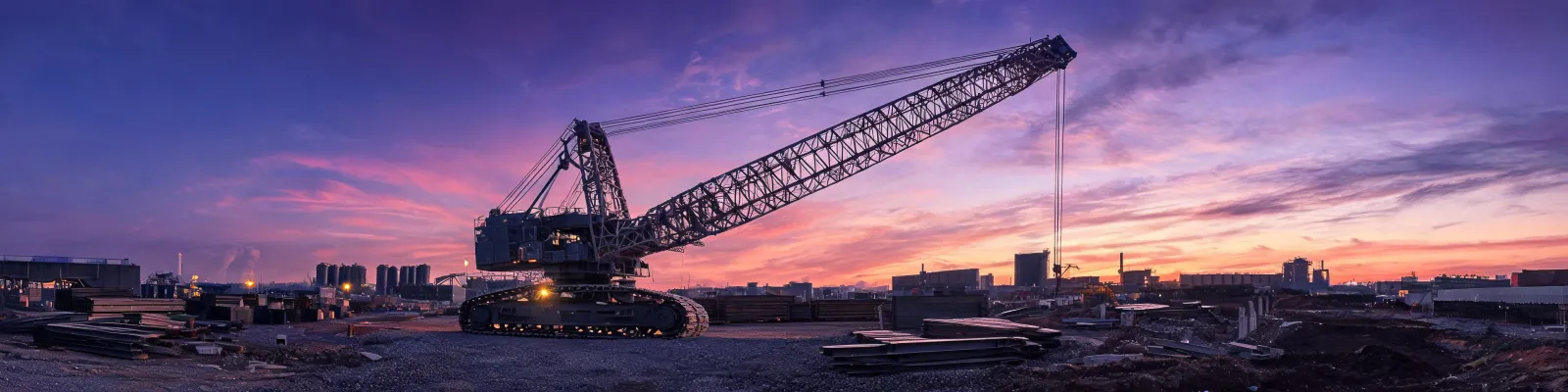
Tower Crane Wholesale Cost Guide: Why the Cheapest Ton Crane Quote Becomes the Most Expensive Machine
You're bidding a project that needs at least two bulk ton cranes on site. You ping three vendors for tower crane wholesale pricing. The quotes come back $180K, $215K, and $248K. You go with the $180K. Then you enter the most expensive learning curve in equipment procurement.
I'm a procurement coordinator at an equipment rental company. I've handled 400+ rush orders in nine years, including same-day turnarounds for GCs across the Midwest. I've watched this exact scene play out more times than I can count. And each time, the purchasing team was looking at one number on a quote sheet — turning a predictable project into an emergency.
Here's the thing: that number is never the price of the machine.
It's the price of a machine. There's a difference.
What Your Ton Crane Manufacturer Quote Isn't Telling You
Most buyers assume they're comparing apples to apples. They're not. Two tower cranes in the same tonnage class, with the same nominal lifting capacity stamped on the spec sheet, can differ by 30% or more in real cost. Not because the manufacturer is padding the number — because the tonnage label itself is incomplete.
The specification gap
"50-ton tower crane" means almost nothing for pricing purposes. What matters: max lifting capacity at what radius, load moment at maximum height, jib length, hoist gear rating, slewing speed, counter-jib configuration.
Two quotes for the same "50-ton" unit. One has a 60-meter jib, one has 45. One has variable frequency drives on the hoist, one has contactor control. The $180K quote has the lower tier of every single one of those specs. You will pay to upgrade them later, at retail, without the package discount you would have gotten at the initial purchase.
OEM parts versus aftermarket — this is where the budget dies
This is the leak that nobody catches until year two. A wholesale quote typically comes with a default parts package that's adequate, not optimal. Safety limit switches, hoist brake pads, wire rope grade, control panel relays. Every one of those has an aftermarket equivalent that costs less upfront and more over the life of the machine.
The delta between "generic" and OEM runs anywhere from 8% to 15% on the initial invoice. Over five years, it's 20% to 40% of total cost of ownership. I've seen a client save $6,000 on a used parts package and then spend $19,000 in premature replacements over three seasons.
(And yes — if you landed here searching for manitowoc ice machine parts, that confusion is real. Manitowoc Ice is a separate foodservice equipment company that makes commercial ice machines. Different business line, different parts ecosystem, no relationship to the construction lifting equipment we're talking about. You're not the first procurement person to hit that wall.)
Delivery, erection, and site prep
Almost no wholesale quote includes foundation engineering, mast assembly, or commissioning. For a large tower crane, those line items run $25K to $60K depending on site access and season. If the quote sheet doesn't itemize them, you're not comparing identical scopes.
Compliance and certification
This one bites hardest in regulated jurisdictions. Load charts, annual inspection documentation, structural certification paperwork, control system software versions — these vary by manufacturer and by market. What's legal on one side of a state line isn't always legal on the other.
I watched a contractor in early 2024 lose a $340K project delay penalty because the certification packet for a mid-tier crane didn't match the OSHA and local code requirements on the install site. Three weeks of downtime. The $180K quote they were so proud of became a $520K decision once the dust settled.
Why This Keeps Happening
It's not ignorance. It's structural.
Procurement teams are measured on one thing: the price they locked in at PO date. Nobody gets a bonus in year three for avoiding a brake failure. So the incentive is to compare the numbers you can see — and the numbers you can't see don't get modeled.
Meanwhile, the true document you should be comparing is a total-cost-of-ownership model covering the first seven years. Machine, spares, service access, downtime probability, resale value. When clients finally build that model, the ranking flips. Every time. It isn't even close.
Everything I'd read about tower crane purchasing said "negotiate hard on the unit price." In practice, on bulk ton crane projects, the biggest wins I've gotten came from negotiating the parts contract and the service response SLA — not the sticker.
Part of me still believes in hard unit-price negotiation. Another part has watched too many cheap quotes explode on site to believe it's the main lever anymore. I compromise: I negotiate price hard, and I negotiate service and spares harder.
The Real Cost of Not Getting This Right
Let me be specific, because "hidden costs" is a phrase that means nothing until you're living it.
Downtime. A mid-size tower crane out of service for a critical hydraulic part runs $4,000 to $12,000 per day in schedule impact — and that's before penalties. If the part is OEM-only and back-ordered, you're not looking at days. You're looking at weeks.
Compliance failures. Re-inspection, re-certification, and potential work stoppages. Not cheap. Also not something you can negotiate retroactively.
Resale haircut. A crane bought with a non-OEM parts history resells at 15% to 25% below market. Every dollar saved upfront is a dollar plus interest taken out at disposition.
Rush premiums you didn't budget for. Last quarter alone I processed 47 rush orders on crane components, and 60% of those traced back to a specification mismatch that was visible in the original quote — if anyone had read the fine print. The average rush premium was $3,200. That's not a supply chain problem. That's a procurement problem.
How to Actually Evaluate a Tower Crane Wholesale Cost Guide
Three things. Do them in this order.
- Demand a line-item BOM. Not the headline spec. Actual bill of materials, with model numbers on safety components and drive systems. If the vendor won't produce it, that's your answer.
- Model 7-year TCO, not sticker price. Include parts, expected downtime, service SLA cost, and projected resale. Force the comparison onto a spreadsheet where hidden costs have to show up.
- Get the parts and service contract in writing before the PO. Response time guarantees, OEM sourcing, and escalation path. This is the clause that determines whether your cheap quote stays cheap.
Side note for the SEO traffic that finds this page for the wrong reasons: if you're searching commercial landscape construction Manitowoc, you're looking for local landscape contractors in Manitowoc, Wisconsin. That's a completely separate search intent from construction lifting equipment. Manitowoc the city and Manitowoc the crane manufacturer share a name, not a business. Worth knowing before you call the wrong number.
Bottom line: bulk ton cranes and tower cranes are not commodities. The wholesale price is only the first line of a document that should run to 40 pages. Buyers who understand that get the real deal. Buyers who chase the sticker get the emergency call — usually at 4 a.m. on the morning of a concrete pour.